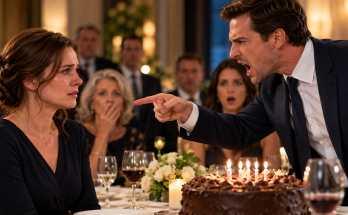

Five years after his “fatal” accident, I found my husband alive, rocking a newborn at a private Boston center. “Walk away,” he commanded, while my mother-in-law sneered that I’d be the one jailed for their scam.
Five years after his “fatal” accident, I found my husband alive, rocking a newborn at a private Boston center. “Walk away,” he commanded, while my mother-in-law sneered that I’d be the one jailed for their scam. They think I’m still the broken widow, but I hunt liars for a living now. I looked at my phone and said, “Better pray I’m not alone.” The sirens in the distance were only the beginning….
Five Years After I Buried Him, My Dead Husband Returned With a Newborn—and an Army Protecting His Lie
Five years after I had buried an empty coffin, Daniel Mercer looked directly at me and dropped the baby bottle in his hand.
It struck the polished floor of the private maternity center with a hollow plastic clatter. Milk spread beneath his shoes while neither of us moved.
I had come to Hawthorne House, an exclusive recovery residence outside Boston, to visit my colleague Nora after the birth of her daughter. A distracted nurse had directed me toward the east wing instead of the garden suites. I followed the signs through a quiet corridor lined with watercolor paintings, fresh lilies, and discreet security cameras.
Then I heard a man humming.
It was a melody Daniel used to sing while shaving, an old soldiers’ march his father had taught him.
I stopped beside a half-open door.
Inside, a young woman slept beneath a pale blue blanket. She looked exhausted, perhaps twenty-five, with one hand resting protectively over her abdomen. Daniel stood beside her, adjusting an intravenous line with the confidence of someone who had been there for days.
My mother-in-law, Evelyn Mercer, sat near the window, rocking a newborn wrapped in white cashmere.
For one frozen moment, the world narrowed to Daniel’s scar.
It cut through his left eyebrow, thin and silver, exactly where a piece of glass had struck him during our honeymoon. I had kissed that scar every morning for eleven years.
Daniel looked older now. His shoulders were broader, his hair streaked with gray. But death had not changed the way his eyes hardened when he felt cornered.
Evelyn noticed me first.
Her smile collapsed.
“Claire,” she whispered.
Daniel crossed the room in three strides, stepped into the hallway, and closed the door behind him.
“You should not be here.”
I almost laughed.
“At a maternity center?” I asked. “Or in the same world as a dead man?”
His hand closed around my elbow.
“Keep your voice down.”
I stared at his fingers until he released me.
Five years earlier, state police had told me Daniel’s SUV had broken through a guardrail during a storm and plunged from a coastal road into the Atlantic. Divers found twisted metal, his blood on the driver’s seat, his watch trapped beneath the dashboard, and a section of his military identification card in the wreckage.
They never recovered a body.
I spent months imagining him beneath black water.
At the memorial, Evelyn had held my hands and said Daniel would want me to protect everything he built. Mercer Construction was collapsing beneath debt, lawsuits, and unfinished government contracts. She convinced me to invest the life-insurance settlement, my savings, and nearly every asset I owned.
I believed I was preserving my husband’s legacy.
Instead, I had financed his resurrection.
From behind the closed door, the young woman called weakly, “Danny?”
My stomach turned.
Daniel glanced toward the room.
That single glance told me more than any confession could have.
He cared whether she was frightened.
He had not cared when I was.
Evelyn stepped into the hallway, still holding the newborn. Her pearl earrings trembled against her neck.
“This is not what you think,” she said.
“No,” I replied. “It is much worse.”
Daniel’s expression became cold and managerial, the face he once used when negotiating military contracts.
“You received the insurance settlement. You rebuilt your life. Walk away.”
He still believed I was the obedient widow who signed whatever document he placed in front of me. He did not know what grief had made of me.
After his death, I had found inconsistencies in Mercer Construction’s accounts. I noticed invoices issued by shell companies, equipment purchased twice, and transfers routed through foreign banks hours before Daniel’s accident.
When I asked Evelyn, she accused me of dishonoring him.
So I stopped asking.
I studied.
I earned certifications in forensic accounting, fraud examination, sanctions compliance, and battlefield procurement analysis. I joined the federal Inspector General’s office and eventually became a senior financial investigator for the Defense Reconstruction Authority.
For the past two years, I had hunted contractors who stole fuel, weapons, medical supplies, and food from soldiers fighting in the Republic of Vardania.
Liars had become my profession.
I slipped my hand into my coat pocket and activated the voice recorder on my phone.
Faces. Timestamps. Doors. Cameras. Possible exits.
Grief had once made me powerless. Numbers taught me patience. Patience taught me that criminals always revealed too much when they felt safe.
“Who is she?” I asked.
Daniel did not hesitate.
“My wife.”
The word entered me like a blade, but it found scar tissue instead of an open wound.
“And the child?”
“Our son.”
Evelyn leaned closer, lowering her voice.
“If you cause trouble, we will tell the authorities you knew everything. Insurance fraud makes a widow look very guilty, Claire. Your signatures are on the company documents. Your money moved through the accounts. You could spend the rest of your life proving you were not involved.”
I met her eyes.
For the first time since entering the hallway, I smiled.
“Then you should hope,” I said softly, “that I did not come here alone.”
A siren sounded somewhere beyond the landscaped grounds.
Daniel’s head snapped toward the nearest window.
A second siren joined the first.
Then a third.
Evelyn clutched the baby tighter.
Daniel seized my wrist and pulled me toward the emergency stairwell.
“What did you do?”
“Nothing yet.”
He shoved open the metal door.
Two men in dark suits appeared on the landing below us.
They were not police.
Both wore flesh-colored communications wires behind their ears. One moved his hand beneath his jacket.
Daniel dragged me backward.
The first man shouted, “Sir, east gate has been breached.”
The word sir told me Daniel was not merely hiding.
He was commanding.
The corridor lights went dark.
A violent boom shook the building, followed by the mechanical clatter of emergency locks engaging.
The newborn began to cry.
Patients screamed behind closed doors.
Daniel released me and drew a compact pistol from beneath his sweater.
Evelyn stared at the weapon.
“Daniel, you said this place was secure.”
“It was.”
He pointed the pistol at me.
“Give me your phone.”
I kept my breathing even.
“You plan to murder me in a maternity center?”
“I plan to survive.”
The door behind him opened.
The young woman stepped into the hallway, one hand gripping the frame. She was barefoot and pale, with adhesive medical strips visible beneath her gown.
“Danny, what’s happening?”
Daniel turned slightly.
That was enough.
I drove my palm into his gun wrist and twisted with both hands. The pistol fired into the ceiling. Plaster rained over us as I slammed his arm against the wall.
Five years earlier, he had been stronger than I was.
Five years earlier, I had never trained with military investigators.
He struck me across the face and tore free. I stumbled into a linen cart.
One of the suited guards rushed through the stairwell door.
Before he could raise his weapon, a red laser dot appeared on his chest.
“Federal tactical unit!” a voice thundered from below. “Drop it!”
The guard fired down the stairs.
Automatic gunfire erupted.
Patients shrieked.
Daniel grabbed Evelyn by the shoulder.
“Take Anna and the child to the service elevator.”
The young woman looked from him to the gun in his hand.
“You told me you worked for the government.”
“I do.”
“Why are people shooting?”
“Because Claire brought them.”
He pointed at me.
The lie landed with practiced precision.
Anna’s frightened gaze fixed on my face.
I raised my empty hands.
“My name is Claire Mercer,” I said. “Daniel was married to me for eleven years. Five years ago, he staged his death.”
Anna shook her head.
“No.”
“Ask him where he was on October seventeenth five years ago. Ask why there is no body in his grave.”
Daniel’s pistol swung toward me.
Anna stepped between us.
He stopped himself from firing, but his hesitation betrayed him.
Evelyn moved closer to Anna.
“Do not listen to her. She is unstable. She has been obsessed with Daniel for years.”
I reached slowly into my pocket.
Daniel aimed at my head.
“Phone. Now.”
I withdrew the device and held it between two fingers.
The recording icon glowed on the screen.
His face changed.
I tapped a button.
The file uploaded automatically to an encrypted evidence server.
“Too late,” I said.
A second explosion thundered outside.
Through the tall corridor windows, I saw a black armored vehicle smash through Hawthorne House’s wrought-iron gate. Behind it came three federal SUVs.
But gunfire erupted from the trees before the vehicles reached the entrance.
Men in gray tactical uniforms rose from concealed positions along the stone wall.
Their rifles opened fire.
Bullets struck the lead SUV, shattering glass and forcing it sideways into a fountain.
This was not an arrest operation anymore.
It was a battle.
Daniel took one look outside and swore.
“They found us too soon.”
“Who?” Evelyn demanded.
He ignored her.
He pulled a radio from his pocket.
“Raven Actual to all stations. Initiate Winter Passage. Burn local files. Move package to Route Black.”
A voice crackled through the radio.
“Raven Actual, western perimeter compromised. Federal team and Guard elements on-site.”
National Guard.
That explained the armored vehicle.
It did not explain why Daniel had enough armed men to fight them.
I remembered the unusual questions Nora’s nurse had asked when I arrived: whether I carried a government identification card, whether anyone knew I was visiting, whether my vehicle had satellite tracking.
The wrong hallway had not been an accident.
Someone had recognized me.
Someone had triggered the emergency before I ever saw Daniel.
“Who are you working for?” I asked.
Daniel’s eyes flicked toward me.
“You still think this is about insurance money?”
The gunfire intensified outside.
Windows burst inward at the far end of the corridor.
Evelyn screamed and crouched around the baby.
Daniel grabbed Anna and pushed her toward the service elevator.
“Move.”
She resisted.
“You said we were leaving for Montreal tomorrow.”
“We are leaving now.”
“I’m not going anywhere until you explain.”
He struck the elevator button.
It did not respond.
The emergency lockdown had cut power.
Daniel’s control finally cracked.
He kicked the doors hard enough to dent them.
“Stairs,” he said.
He motioned to the two remaining guards.
One took Anna by the arm. The other reached for Evelyn.
I moved with them because the alternative was being shot.
We descended through dim concrete levels while alarms wailed overhead. Daniel’s men appeared at each landing, some carrying rifles, others dragging hard drives and burning folders inside metal disposal bins.
On the ground floor, a wounded guard lay against the wall, blood pooling beneath his vest.
Daniel barely looked at him.
“Status?”
“North team gone. Federal units cut the road.”
“Vehicle tunnel?”
“Still clear.”
Daniel led us through the kitchen, past terrified staff members hiding beneath stainless-steel counters. At the rear pantry, he pressed his thumb against a concealed reader.
A shelving unit slid aside.
Behind it waited a concrete ramp descending underground.
Hawthorne House had been built above an old Cold War emergency hospital. I had read about such facilities during an audit of surplus military properties. Most had been sealed decades ago.
This one had been renovated.
The tunnel below was wide enough for trucks. Fluorescent lights ran toward a steel gate nearly fifty yards away. Crates stood stacked along both walls.
The nearest bore markings for infant formula.
A damaged lid revealed rows of military detonators.
I looked farther down the line.
Medical incubators.
Blood-storage equipment.
Satellite terminals.
Vardanian army insignia.
Then I understood.
For three years, Mercer Construction had received hundreds of millions of dollars to rebuild hospitals, bridges, and power stations in Vardania. My agency had discovered missing equipment but never found the distribution network.
The stolen goods were not all overseas.
Some had been routed back through charitable medical shipments, concealed in maternity supplies, and stored beneath private recovery centers.
Daniel had not escaped his business.
He had expanded it into wartime smuggling.
“Those detonators belong to the Vardanian Army,” I said.
“They belonged to whoever paid for them,” Daniel replied.
“The weapons shortages at Karsk Province. The hospitals without generators. The convoy ambushes because encrypted radios never arrived.”
His expression remained flat.
“Wars create inefficiencies.”
“Soldiers died.”
“Soldiers always die. That is why wars are profitable.”
Anna made a strangled sound.
Daniel looked at her.
“You knew I managed logistics.”
“You said medical logistics.”
“I never lied about that.”
“You said your first wife died.”
His eyes shifted toward me.
“I said she was gone.”
The answer seemed to break something inside Anna.
She pulled away from the guard holding her.
“I want my baby.”
Evelyn tightened her grip.
“You are weak. Let me carry him.”
“Give him to me.”
“Anna—”
“Give me my son!”
Her shout echoed through the tunnel.
Daniel marched toward her.
“We do not have time for this.”
Anna backed away.
“You married me under a false name.”
“I protected you.”
“You used me.”
The gunfire above became muffled thunder.
A radio operator near the gate shouted that federal forces had entered the building.
Daniel seized Anna’s jaw.
“You will take the child, get into the vehicle, and remain quiet until we cross the border.”
I stepped forward.
“Let her go.”
He turned.
For one instant, I saw the husband I had once known—not the charming contractor who brought flowers after long trips, but the private man who could turn any room into a prison by lowering his voice.
“You never learned,” he said. “You always believed knowing the truth gave you power.”
“No. Evidence gives me power.”
“You have no idea what evidence you are standing beside.”
A guard opened the steel gate.
Beyond it, in a second underground chamber, six armored trucks idled beneath ventilation fans. Men loaded crates into the rear compartments.
On the wall hung a digital operations map.
Red markers covered eastern Vardania, the Black Sea coast, Boston, Montreal, Rotterdam, and several military bases in Germany.
A countdown clock showed thirty-eight minutes.
Beneath it were the words PHASE IRON DAWN.
I memorized the details before Daniel saw where I was looking.
He shoved me toward the lead truck.
“Put her in vehicle three.”
The guard grabbed my arm.
I drove my heel down on his foot, twisted, and slammed my elbow into his throat. He staggered, but Daniel struck me in the ribs with the pistol.
Pain folded me to the floor.
“Do that again,” he said, “and I will kill Anna first.”
Anna stared at him.
Something changed in her face.
Fear remained, but obedience disappeared.
Evelyn whispered, “Daniel, we cannot take Claire. She is a federal investigator.”
“That is precisely why we take her.”
“You said no witnesses.”
“She is worth more alive.”
“To whom?” I asked.
He smiled without warmth.
“To the people whose war you have been auditing.”
The guard hauled me upright and forced me into the armored truck.
Anna climbed in beside me, holding the baby now. Evelyn sat across from us. Daniel entered last and sealed the door.
The vehicle accelerated before we had secured ourselves.
Inside, red emergency lights illuminated steel benches, communications racks, and locked weapon cabinets. A narrow display showed the convoy moving through a tunnel beneath the woods.
I pressed a hand against my ribs and tried to breathe.
Anna looked at me.
“Is your name really Claire Mercer?”
“Yes.”
“How long were you married?”
“Eleven years.”
She looked down at the sleeping child.
“I married him eighteen months ago. He called himself David Kane.”
Evelyn sighed.
“This emotional performance helps no one.”
Anna’s eyes lifted.
“Did you know?”
Evelyn adjusted one pearl earring.
“I knew Daniel required a new identity.”
“You came to my wedding.”
“I supported my son.”
“You held my mother’s hands.”
“She was becoming inconvenient.”
Anna went white.
“What does that mean?”
Daniel sat near the rear door, studying a tablet.
“Enough.”
Anna flinched when he spoke.
I knew that flinch.
It was small, almost invisible, but I recognized years compressed inside it.
“How did you meet him?” I asked.
She swallowed.
“At a humanitarian conference in Geneva. My father runs a medical foundation. Daniel said he coordinated neonatal equipment for war zones.”
“Your father’s foundation is Halcyon Relief?”
Her eyes widened.
“Yes.”
Halcyon Relief had shipped hundreds of incubators, surgical kits, and mobile pharmacies to Vardania. Three months earlier, my team found that several shipping containers had vanished between ports.
Anna was not merely a new wife.
She was access.
“Did he ask you to authorize shipping changes?” I asked.
“Sometimes. He said customs officials needed my digital signature.”
Daniel looked up from the tablet.
“Claire.”
“How many documents?” I continued.
“I don’t know. Twenty? Thirty?”
“Claire, stop.”
“Did he ask you to transfer ownership of relief warehouses?”
Anna’s breathing quickened.
“He said it was temporary.”
Daniel rose.
The truck swerved, throwing him against the wall.
Outside, gunfire rattled against the armored plating.
The convoy had emerged from the tunnel.
A monitor showed a forest road flashing beneath headlights. Two trucks followed us. A fourth burned near the tunnel entrance while National Guard vehicles pursued through smoke.
Daniel grabbed the radio.
“Deploy mines.”
I stared at him.
“There are civilians on these roads.”
“Then they should have stayed home.”
A guard’s voice responded, “Mines armed.”
I lunged toward the radio.
Daniel backhanded me hard enough to split my lip.
Anna screamed.
The baby woke crying.
Evelyn pressed herself into a corner.
Daniel placed the pistol beneath my chin.
“You are not in an audit room.”
“No,” I said through the taste of blood. “In an audit room, you would already be finished.”
The first mine exploded behind us.
The truck lifted slightly as the blast rolled beneath the convoy.
On the monitor, a pursuing armored vehicle veered into the trees.
The image cut to static.
Daniel returned to the operations map.
I studied the vehicle’s interior.
A medical bag lay beneath Evelyn’s bench. A fire-suppression panel sat near the ceiling. Two guards occupied the front compartment behind a reinforced partition. The door control required a code.
The baby continued crying.
Anna tried to soothe him, but her hands trembled badly.
“What is his name?” I asked.
“Samuel.”
Daniel’s head rose.
“His name is Elias.”
Anna stared at him.
“We agreed on Samuel.”
“I changed it.”
“He is not a shipping document.”
“He is my son.”
The possessiveness in his voice filled the compartment.
I leaned closer to Anna.
“Keep him protected against your chest.”
She understood that I was not talking about comfort.
The convoy turned sharply onto a wider road.
Daniel’s tablet displayed a message.
IRON DAWN CONFIRMED. VARDANIAN GRID WINDOW: 02:00 LOCAL.
My ribs tightened for reasons that had nothing to do with injury.
“What happens at two in the morning?” I asked.
He locked the screen.
“You will find out.”
“I already know enough. Phase Iron Dawn. Power grid. Missing military detonators. Stolen radios. You are preparing an offensive.”
His silence confirmed it.
For months, peace negotiations had been advancing between Vardania and the neighboring state of Orlis. A ceasefire was expected within days.
A new attack on civilian infrastructure could collapse the negotiations and extend the war.
Extended war meant extended contracts.
“You are going to destroy the Vardanian grid and blame Orlis,” I said.
Evelyn’s eyes moved toward Daniel.
Even she had not known everything.
Anna whispered, “My father’s mobile hospitals are connected to that grid.”
“Backup generators will fail,” I said. “Because Mercer Construction supplied defective fuel systems.”
Daniel smiled faintly.
“You always were quick.”
“How many people?”
“Numbers are your department.”
“Daniel, how many?”
“Enough to ensure both governments reject the ceasefire.”
The truck struck something hard.
The lights flickered.
A burst of automatic fire hammered the left side.
One guard shouted from the front.
“Roadblock!”
Brakes screamed.
Our bodies slammed forward. Daniel lost his balance, and the pistol flew from his hand.
I kicked it beneath the opposite bench.
The rear doors shook under an external impact.
Smoke began filling the compartment.
“Ambush!” someone yelled.
Daniel threw himself toward the hidden pistol.
Anna shifted the baby into one arm and kicked him in the face.
It was not a trained strike.
It was furious, desperate, and perfectly timed.
Daniel fell backward.
I reached the weapon first.
I pointed it at his chest.
“Do not move.”
The convoy guards opened fire from the front compartment.
Bullets pierced the partition in bright sparks.
Evelyn screamed and crawled beneath the bench.
I moved between Anna and the gunfire.
The rear lock flashed green, then red.
Someone outside was attempting to override it.
Daniel wiped blood from his mouth.
“You will not shoot me.”
“Five years ago, you might have been right.”
“You still need answers.”
“I need you breathing. That is not the same as needing you comfortable.”
His gaze slid toward the fire-suppression panel.
I saw the decision before he moved.
He struck it with his fist.
A chemical cloud erupted from ceiling nozzles.
The red lights vanished behind white vapor.
I fired once toward the floor near his feet.
Anna coughed.
The baby wailed.
Metal crashed against metal as another vehicle rammed us.
I reached for Anna’s sleeve.
“Stay low. Follow my voice.”
A shadow struck me from the side.
Daniel drove his shoulder into my ribs, and agony exploded through my body. The pistol discharged. Someone cried out.
We grappled blindly.
He closed one hand around my throat.
“You should have stayed a widow,” he whispered.
I drove my thumb into the scar above his eyebrow.
He roared and loosened his grip.
The rear doors burst open.
Cold night air tore through the chemical haze.
Dark figures appeared outside.
“Drop your weapons!”
Daniel dragged me against his chest and pressed a knife to my throat.
As the vapor cleared, I saw soldiers behind armored shields. Their uniforms carried Massachusetts National Guard insignia, but the woman at their center wore civilian body armor.
Special Agent Lena Ortiz.
My closest friend.
The person I had texted from the Hawthorne House parking lot after recognizing an encrypted vehicle tag linked to one of our investigations.
I had sent only seven words:
MERCER ALIVE. HAWTHORNE HOUSE. BRING EVERYONE.
Lena aimed her rifle at Daniel’s face.
“Let her go.”
Daniel pulled the knife tighter.
“You fire, she dies.”
“Maybe,” Lena said. “But you die first.”
He laughed softly.
“You think this ends with me?”
“No,” I said. “It begins with you.”
I stamped backward onto his knee.
The joint buckled.
Lena fired.
The round struck Daniel’s shoulder, spinning him away from me.
National Guard soldiers rushed the truck.
One pulled Anna and Samuel outside. Another dragged Evelyn from beneath the bench.
I knelt over Daniel, took the knife from his hand, and pressed it beyond his reach.
He stared up at me, pale with shock.
“You called the Guard.”
“I called Lena. The Guard was already monitoring military-grade explosives stolen from Vardania.”
His eyes sharpened.
“How much do they know?”
“Not enough.”
For the first time, fear entered his face.
Lena crouched beside me.
“We intercepted references to Iron Dawn. We need the initiation method.”
Daniel smiled through clenched teeth.
“Then you need me.”
Lena looked at his wound.
“You need a surgeon. Whether you receive one depends on how quickly you start speaking.”
He said nothing.
A medic secured his arms and applied pressure to the bullet wound.
I turned toward Evelyn.
She sat on the road wrapped in a thermal blanket while an agent questioned her. Even under floodlights, surrounded by soldiers and burning vehicles, she looked offended rather than afraid.
The convoy road cut through dense woodland. One armored truck smoldered in a ditch. Another had escaped north.
Lena followed my gaze.
“Truck two broke through the roadblock. Satellite tracking lost it near the old airfield.”
“What was it carrying?”
“We don’t know.”
Daniel began laughing from the ground.
Everyone looked at him.
“You stopped the wrong vehicle,” he said.
A helicopter passed overhead, sweeping the road with white light.
Lena seized Daniel’s jacket.
“What was in truck two?”
He closed his eyes.
“History.”
The first explosion occurred in Vardania twelve minutes later.
We saw it on a live intelligence feed inside the Guard command vehicle.
A power substation outside the capital erupted in a sphere of blue-white fire. Three transmission lines failed immediately.
Then a hospital generator complex exploded.
Then a military communications tower.
Iron Dawn had begun.
The operations clock at Hawthorne House had not counted down to the first attack.
It had counted down to the last chance to stop the sequence.
A colonel connected us with the Vardanian Ministry of Defense while analysts overlaid financial records, satellite feeds, and intercepted communications on six screens.
Daniel sat handcuffed to a reinforced chair, his shoulder bandaged. He watched the grid collapse without expression.
I stood behind him.
“Each attack is preprogrammed,” I said. “You do not need to transmit new commands.”
He remained silent.
“But there must be a failsafe. You would never create a system you could not stop.”
His jaw moved slightly.
“Because you never trust your partners,” I continued. “You trust leverage.”
Lena placed photographs on the table: burning hospitals, darkened apartment blocks, emergency crews moving through smoke.
“The next targets include Karsk military command, two dams, and the peace conference center,” she said. “Thousands could die.”
Daniel looked at the photographs.
Nothing.
Then Lena displayed an image of Hawthorne House.
Anna sat inside an ambulance, holding Samuel. Agents surrounded her.
Daniel leaned forward.
I saw it.
Not love.
Ownership.
“You built the failsafe around your identity,” I said. “Biometric authentication.”
He looked at me.
“Voice, face, fingerprint, or some combination,” I continued. “You intended to escape in truck one, maintain control, and sell the shutdown to whichever government paid more.”
He smiled.
“You have become impressive.”
“Where is the control device?”
“You already let it escape.”
Truck two.
The old airfield.
A Guard aviation officer reported that an unregistered cargo aircraft had taken off seven minutes earlier, heading northeast over the Atlantic.
Lena asked, “Destination?”
The officer shook his head.
“Transponder disabled.”
Daniel looked almost peaceful.
“By sunrise,” he said, “Vardania will blame Orlis. Orlis will retaliate. The ceasefire will disappear, defense markets will surge, and no court in America will matter.”
“You will be in prison.”
“Prisons are temporary. Wars are permanent.”
I studied the financial charts on the screen.
Wars were not permanent.
Money moved.
And money left trails.
“Which companies profit first?” I asked.
He said nothing.
I pulled up the Mercer Construction network.
For years, investigators had focused on government payments, shell contractors, and offshore accounts. But Iron Dawn was not merely sabotage. It was a market event.
Someone would have placed trades before the attack.
Defense stocks. Energy futures. Shipping insurance. Currency positions.
“Show all transactions connected to Mercer affiliates in the past seventy-two hours,” I told the analysts.
The screens filled with activity.
Most transfers were routine disguises: consulting fees, equipment leases, medical donations.
Then I saw a pattern.
Five shell companies had purchased enormous positions against the Vardanian currency. Three had invested in emergency power manufacturers. Another had acquired options in Black Sea shipping firms.
All were routed through a private financial house in Iceland.
The same institution controlled a long-range corporate aircraft registered to Northstar Neonatal Systems.
“Track Northstar’s plane,” I said.
An analyst searched aviation databases.
“We have no active transponder.”
“Check historical flight plans.”
A route appeared.
Boston to Keflavík.
Keflavík to a decommissioned NATO airfield in northern Norway.
Norway to Vardania.
The cargo aircraft was not fleeing the war.
It was flying toward it.
“What was on that truck?” I asked Daniel.
He smiled.
“The future government of Vardania.”
Lena understood before I did.
“A coup team.”
Daniel nodded.
“When the grid fails, President Anton Vey will be evacuated to the Northern Command bunker. His own security chief will arrest him there. By dawn, General Korvan will announce emergency authority and blame Orlis for the attacks.”
“And recognize your contracts,” I said.
“Triple them.”
The aircraft carried command equipment, weapons, false communications evidence, and likely the biometric shutdown device.
We had stopped Daniel but not his war.
A secure call arrived from Washington.
The Secretary of Defense authorized immediate cooperation with Vardanian forces. The cargo aircraft had to be intercepted before reaching Europe, but American fighters could not engage over allied airspace without confirmation of its cargo and intent.
Daniel knew this.
He had designed the route around legal hesitation.
“We need access to the aircraft systems,” Lena said.
Daniel leaned back.
“You need a miracle.”
I looked at Evelyn through the command vehicle window.
She was being moved toward another transport van.
“Not a miracle,” I said. “His mother.”
Daniel’s confidence flickered.
Evelyn had signed Mercer Construction documents for decades. She had managed political donations, charities, and family trusts. Daniel considered her useful but intellectually inferior.
Men like Daniel rarely noticed how much their mothers knew because they mistook loyalty for ignorance.
I entered the transport van and sat across from her.
She lifted her chin.
“I require an attorney.”
“You will receive one.”
“Then this conversation is over.”
“Daniel planned to leave you behind.”
Her expression did not change.
“The convoy had four trucks,” I continued. “You were placed in truck one because Anna and Samuel were there. Daniel needed them. He did not need you.”
“He would never abandon me.”
“He abandoned me after eleven years.”
“You were weak.”
“He told you the insurance plan would save Mercer Construction. He told you no one would be hurt. He told you to persuade me to invest the settlement.”
Her pupils tightened.
I had guessed correctly.
“You thought you were protecting the family,” I said. “But tonight he activated an international war plan without telling you.”
“He told me enough.”
“Did he tell you truck two carried a coup team?”
Silence.
“Did he tell you the attacks included maternity hospitals funded by your charities?”
Her lips parted.
“Daniel would not target hospitals.”
“He already did.”
I showed her footage from Vardania.
Doctors carried premature infants down dark stairwells while smoke spread through the building.
Evelyn looked away.
“He said the power outages would be controlled.”
“He lied.”
“No.”
“He lied about his death. He lied to Anna. He lied to both governments. Why would you be the only person he told the truth?”
Her face hardened, but her hands began shaking beneath the blanket.
“What do you want?”
“Access to the aircraft.”
“I do not have it.”
“You approved its purchase through Northstar Neonatal Systems.”
“That was a medical transport company.”
“It was a front.”
“I signed what Daniel asked me to sign.”
“Exactly. Which means your biometric authorization may still be active.”
She stared at me.
Daniel had always used family members as legal shields. If a transaction failed, the blame landed on whoever had signed it.
Evelyn’s fingerprints, voice, and facial scan could be embedded in Northstar’s administrative systems.
“We can place you in witness protection,” I said. “We can document Daniel’s manipulation. But you must cooperate now.”
“My son needs me.”
“Your son left you inside a gunfight while he prepared to cross the border.”
“He came back for us.”
“He came back for his heir.”
Her gaze moved toward the ambulance where Anna held Samuel.
The truth finally reached her.
Daniel had not saved his mother.
He had preserved his bloodline.
Evelyn closed her eyes.
“The aircraft system uses a family emergency protocol,” she whispered. “Daniel created it after his father died. He said no outsider should ever control Mercer assets.”
“What is required?”
“A spoken authorization from two registered family directors.”
“You and Daniel?”
“Yes.”
“Anyone else?”
She looked at me.
“You.”
I felt the air leave my lungs.
“I have not been a Mercer director for five years.”
“Daniel never removed you. Your presumed death status would have triggered insurance reviews. Keeping you active allowed him to transfer responsibility if authorities investigated.”
Even after staging his death, he had kept my identity inside the machinery of his crimes.
I returned to the command vehicle.
Daniel watched my face and knew immediately that Evelyn had spoken.
“You always did resent sharing,” he said.
“We can access Northstar’s emergency protocol.”
“No. You require two directors.”
“Your mother and I.”
His smile faded.
“You are not giving the order.”
“I do not need your permission.”
“You do not understand what happens if that aircraft is forced down.”
“Then explain it.”
“The Iron Dawn network interprets a compromised aircraft as hostile seizure. It accelerates every remaining target.”
Lena asked, “Can you stop the acceleration?”
“Yes.”
“How?”
Daniel looked at me.
“Release me.”
No one answered.
He leaned forward against his restraints.
“You can gamble with thousands of lives or put me on a plane. I reach the aircraft, authenticate the shutdown, and the attacks stop.”
“You expect us to let you fly away,” Lena said.
“I expect you to choose the smaller risk.”
I studied him.
He was too eager.
“You cannot stop Iron Dawn from here,” I said. “Why?”
“The system is isolated.”
“But the plane can control it.”
“Yes.”
“Then the device aboard the aircraft must communicate with the sabotage network.”
He nodded.
“Through military satellites?”
No answer.
“Stolen Vardanian satellites?”
Still no answer.
I looked at the transmission diagram.
During my audits, I had found payments for obsolete battlefield radios manufactured by a company called Helix Tactical. The radios had been removed from service because their encryption system was vulnerable.
Mercer Construction purchased thousands as “construction communication units.”
Daniel had distributed them with stolen equipment across Vardania.
Iron Dawn was not using satellites.
It was using the emergency radio network.
“Every sabotage charge is listening for authenticated Helix commands,” I said. “The aircraft broadcasts through a high-altitude relay.”
Daniel’s eyes narrowed.
I turned to the communications officer.
“Can our aircraft imitate the relay?”
“We would need the encryption seed.”
“Which is stored aboard Northstar’s plane.”
“Most likely.”
“But family emergency access could connect us to the aircraft’s administrative network.”
The officer nodded slowly.
“If the protocol grants maintenance control, we might extract the seed remotely.”
Daniel pulled against his handcuffs.
“You trigger that protocol, people die.”
“Only if we force the aircraft down before copying the encryption key.”
His silence confirmed the plan.
We connected Evelyn from the transport van and placed her before a secure camera.
A system technician found Northstar’s hidden administrative portal behind seven layers of corporate security.
The screen requested FAMILY CONTINUITY AUTHORIZATION.
Evelyn spoke first.
“Evelyn Rose Mercer. Director authorization seven-one-black.”
A blue light scanned her face.
IDENTITY CONFIRMED.
My turn.
For five years, I had refused to call myself Claire Mercer. Professionally, I used my birth name, Claire Donovan. Daniel’s surname had become a grave I did not wish to visit.
Now it was a weapon.
“Claire Anne Mercer,” I said. “Director authorization requested.”
The camera scanned my face.
The system paused.
Daniel watched with open hatred.
IDENTITY CONFIRMED.
Two options appeared:
ASSET PRESERVATION
FAMILY EXTRACTION
“Choose preservation,” Evelyn said.
Daniel shouted, “Do not touch either.”
I selected ASSET PRESERVATION.
The portal opened.
Aircraft telemetry flooded the screens.
Altitude. Fuel. Cargo temperature. Crew identities. Navigation route.
And a classified Helix command module transmitting toward Europe.
The communications officer began copying data.
“Encryption seed located.”
A warning appeared.
UNAUTHORIZED NETWORK MIRROR DETECTED.
Daniel smiled.
“You have thirty seconds.”
The aircraft system attempted to purge the command module.
Our technicians fought to maintain access.
Twenty-eight seconds.
The Vardanian grid map showed fourteen remaining targets.
Twenty-one seconds.
The encryption copy reached forty percent.
Seventeen seconds.
Daniel began counting aloud.
“Sixteen. Fifteen. Fourteen.”
Lena struck the back of his chair.
“Be quiet.”
He laughed.
The copy reached seventy-three percent.
Nine seconds.
Evelyn whispered a prayer through the video connection.
Six seconds.
The system displayed PURGE INITIATED.
Three seconds.
The technician slammed his hand onto the keyboard.
The screen went black.
No one spoke.
Then a small green message appeared.
KEY RECOVERED.
The communications officer transmitted the encryption seed to American, Norwegian, and Vardanian command centers.
A signal specialist built a cancellation command.
The first attempt failed.
Two more substations exploded.
The second attempt reached half the devices but was rejected by identity verification.
The bombs required Daniel’s voiceprint.
He watched the grid burn.
Lena placed a microphone before him.
“Give the cancellation phrase.”
“No.”
She showed him the legal authorization for lethal wartime detention measures.
He looked bored.
“You cannot frighten a man who died five years ago.”
I took the microphone.
“You built the system around yourself because you wanted to feel indispensable.”
He smiled.
“That sounds like admiration.”
“It is diagnosis.”
I opened a file from the aircraft server.
The command module contained multiple registered voiceprints.
Daniel Mercer.
General Korvan.
Mikhail Soren, director of the Helix weapons network.
And David Kane.
His false identity.
Daniel had generated a synthetic voice model to operate under both names.
“Your system does not need you,” I said.
I selected the David Kane voice profile.
Daniel stopped smiling.
Using recordings from Hawthorne House and the convoy radio, the technicians reconstructed his command pattern.
The first synthetic phrase was rejected.
The second passed vocal identity but failed cadence.
Daniel tried to remain expressionless, yet his fingers tightened against the restraints each time the voice spoke.
I replayed the recording from the maternity-center hallway.
“Walk away.”
Then another phrase from the convoy.
“Wars create inefficiencies.”
And another.
“Initiate Winter Passage.”
The system mapped his rhythm, pauses, and breathing.
The technician generated a new command.
“Raven Actual authorizes black winter termination. Iron Dawn return to silence.”
We transmitted it through the captured Helix network.
Across the Vardanian grid map, target markers changed from red to amber.
Then green.
One by one, the remaining explosives disarmed.
At the Northern Command bunker, Vardanian loyalists intercepted General Korvan’s coup team after receiving the decrypted flight data.
Norwegian fighters surrounded the Northstar cargo aircraft over the Atlantic. Its pilots initially refused orders to land.
Then our technicians locked its navigation system through the family emergency portal.
The aircraft descended at a military airfield in Iceland.
Inside, authorities found weapons, forged Orlis military communications, millions in untraceable currency, and a portable command center designed to install a puppet government before sunrise.
Daniel watched the reports arrive.
For the first time, he looked like a dead man.
But the war did not end that night.
Iron Dawn destroyed enough infrastructure to throw eastern Vardania into darkness. Orlis mobilized troops before investigators proved the attacks were fabricated. Rumors spread faster than evidence. Border artillery exchanged fire. Civilians fled cities already damaged by years of fighting.
The ceasefire conference was postponed.
Daniel’s conspiracy had failed, but fear had momentum.
Three days later, the United States sent a joint financial and military investigation team to Vardania. I volunteered before Lena could object.
“You have cracked ribs, twelve stitches, and a dead husband who has come back to life twice,” she said.
“I am aware.”
“You belong in a hospital.”
“So does half of Vardania.”
“You are not a soldier.”
“No. I follow money. Daniel’s network is still financing commanders on both sides. Unless we expose it publicly, someone else will restart the war.”
Lena studied me.
“You are going because of the investigation?”
“I am going because five years ago, I helped fund Mercer Construction.”
“You did not know.”
“The people freezing in dark hospitals will not care what I knew.”
“That is guilt talking.”
“Guilt can still carry useful equipment.”
She came with me.
We arrived in Vardania aboard a military transport filled with generators, medical supplies, forensic servers, and replacement radios.
The capital, Darsin, looked almost peaceful from the air. Snow covered damaged rooftops. Rivers reflected the pale winter sun.
Then we descended beneath the smoke.
The main terminal had no electricity. Soldiers guided aircraft with hand lamps. Ambulances waited beside cargo pallets while air-raid sirens echoed across the city.
President Vey’s government still controlled the capital, but General Korvan’s supporters had seized two eastern military districts. Orlis forces gathered beyond the border. A single misunderstood artillery strike could restart full war.
Our assignment was to map Mercer’s financial network and identify which commanders were being paid to sabotage the ceasefire.
The evidence led us to Karsk Province.
Karsk had once been a manufacturing region. Now its factories were blackened shells, its railway yards cratered by missiles, and its villages divided between government troops, local militias, smugglers, and displaced families.
Mercer Construction had controlled nearly every reconstruction contract in the province.
Daniel had built roads that ended before reaching villages, hospitals without oxygen systems, and bridges unable to support armored vehicles.
The failures had seemed like corruption.
They were strategic.
He had designed the province to collapse under pressure.
At a field headquarters near the city of Belisar, Colonel Mara Ilyan spread engineering maps across a wooden table.
“Mercer contractors reinforced this highway,” she said. “But the foundation is hollow in twelve locations. If our brigades move east, the road collapses.”
“And the northern route?” Lena asked.
“Bridges contain remote demolition charges.”
“Helix devices?”
“Yes.”
I examined the payment records.
“The maintenance subcontractor is Grayhaven Infrastructure.”
Colonel Ilyan nodded.
“They disappeared after Iron Dawn.”
Grayhaven was controlled by one of Daniel’s shell companies.
“Where is their local office?”
“Old cement factory outside Belisar.”
We reached the factory before dawn with a Vardanian infantry unit.
Snow blew through shattered windows. Abandoned mixers stood beneath rusted gantries. The main office had been burned, but Daniel’s people had overlooked an underground records vault.
Inside were ledgers, fuel manifests, military access codes, and lists of bribed officers.
We had just begun scanning the files when the first mortar struck the courtyard.
The blast shattered the vault lights.
Colonel Ilyan shouted for everyone to take cover.
A second shell hit the eastern wall.
Concrete collapsed across the stairs.
We were trapped underground.
Lena activated her radio.
“Ambush force, at least platoon strength.”
Gunfire erupted above as our escort engaged attackers among the loading towers.
I crawled toward a fallen emergency lamp and found Colonel Ilyan bleeding from the forehead.
“Can you move?”
“Yes.”
She pulled open a map of the old factory.
“There is a conveyor tunnel leading west.”
The passage was narrow, flooded ankle-deep, and filled with decades of dust. We carried the evidence drives while soldiers held the stairs.
Halfway through, an explosion collapsed the tunnel behind us.
The shock wave extinguished our lights.
For several seconds, we stood in absolute darkness.
Then someone began firing from the western exit.
Bullets sparked against the concrete.
A young Vardanian soldier fell beside me.
His name was Tomas. He had shown me a photograph of his two sisters during the drive.
I pressed both hands against the wound beneath his armor.
“Stay with me.”
He tried to speak.
Blood filled his mouth.
Colonel Ilyan returned fire while Lena dragged us behind a support column.
The attackers shouted in Vardanian.
Government military commands.
They were not foreign troops.
They belonged to General Korvan’s network.
Tomas died before the medic reached him.
Something inside me became very quiet.
Daniel had always described war through balance sheets: contract value, risk premiums, replacement schedules.
He had removed the blood from the numbers.
Now it covered my hands.
We escaped through a ventilation shaft while government artillery struck the attackers’ positions. The factory burned behind us.
Among the recovered files was a final payment schedule.
Twenty million dollars would be released if Korvan’s forces captured the Belisar hydroelectric dam within forty-eight hours.
The dam powered emergency hospitals across the province. Its destruction would flood three towns and force the Vardanian army to abandon the eastern defensive line.
The payer was not Daniel.
It was Evelyn.
Her digital authorization appeared on every transfer.
When I confronted her by secure video from a military operations room, she looked smaller than she had in Boston.
“I signed those months ago,” she said.
“You authorized future payments triggered by military objectives.”
“Daniel said they were construction milestones.”
“One milestone reads ‘hydrological neutralization.’”
“I did not understand.”
“You never tried.”
Her eyes filled with tears.
“I trusted my son.”
“No. You preferred him to be innocent because his innocence protected your comfort.”
She flinched.
I continued.
“You threatened to send me to prison. You helped stage his death. You watched him manipulate Anna. You signed documents without reading them because every signature bought you another year of wealth.”
“I did not know people would die.”
“You knew enough to avoid asking.”
For years, I had imagined confronting Evelyn. In those fantasies, exposing her lies brought relief.
The reality felt colder.
She was not a mastermind.
She was something more ordinary and therefore more dangerous: a person who surrendered morality in small installments until catastrophe became administrative paperwork.
“The Belisar payment can still be stopped,” she said.
“How?”
“There is a Mercer trust account in Zurich. Daniel required three directors for wartime transfers.”
“You, Daniel, and me.”
“Yes.”
“Why me?”
“Because the account was created while you were married.”
Even in Vardania, my stolen identity remained part of his machinery.
We froze the trust account with assistance from Swiss authorities, but the attack on the dam had already been ordered.
Korvan’s forces advanced before sunrise.
Colonel Ilyan had fewer than four hundred soldiers defending the valley. The enemy had tanks, artillery, and construction maps revealing every weakness in the dam’s defenses.
The government could not send reinforcements because Daniel’s hollow highways had collapsed beneath their vehicles.
So we used his ledgers as weapons.
The payment records identified enemy fuel suppliers. Vardanian aircraft destroyed two hidden depots.
Maintenance logs revealed that Korvan’s tanks used counterfeit engine components from Mercer affiliates. Colonel Ilyan’s troops mined the steep routes where the vehicles were most likely to fail.
Personnel lists exposed three officers inside the dam security force. They were arrested minutes before opening the gates to enemy infiltrators.
Numbers became barricades.
Spreadsheets became artillery coordinates.
By afternoon, the attack stalled.
Then Daniel escaped custody in Boston.
A corrupted federal contractor disabled cameras during his hospital transfer. Daniel killed one guard, wounded another, and vanished with help from the remaining Grayhaven network.
We learned of the escape while enemy rockets struck the hills above Belisar.
Lena read the message twice.
“He will come here.”
“Why?”
“Because the trust money is frozen, the coup failed, and the network is collapsing.”
“That is exactly why.”
Daniel could still control Korvan’s commanders if he reached them personally. More importantly, evidence from the aircraft suggested that the master Helix control device had been duplicated.
The second device had never been found.
Daniel had kept it.
That night, a blizzard closed the mountain roads.
Under cover of the storm, Korvan’s forces launched their final assault.
Mortars struck the dam’s outer buildings. Enemy infantry crossed the frozen river while drones targeted defensive positions.
I remained in the underground control room with engineers, analysts, and wounded soldiers. Lena joined Colonel Ilyan above.
The lights flickered.
A technician shouted that someone had entered the Helix maintenance network.
On the central display, demolition charges embedded inside the dam began activating.
Daniel had arrived.
The charges were part of Mercer Construction’s original reinforcement project. They had been hidden inside concrete for years.
A countdown appeared.
Twenty minutes.
If the charges detonated, the dam would collapse.
We transmitted cancellation commands using the Iron Dawn encryption seed.
Rejected.
Daniel had updated the system.
I studied the activation log.
The orders were coming from inside the dam complex, not from Korvan’s lines.
He had infiltrated the facility.
Colonel Ilyan locked down every corridor, but enemy soldiers had already entered through a maintenance tunnel omitted from official maps.
A Mercer tunnel.
I knew where it would lead.
Daniel always built private access near financial control points: server rooms, contract archives, communications hubs.
At Belisar Dam, the contract archive was located beneath Turbine Hall Three.
I took a pistol from the emergency cabinet.
The engineer beside me stared.
“You cannot go alone.”
“I know where he is.”
Lena’s voice sounded over the radio.
“Claire, remain in the control room.”
“We have nineteen minutes.”
“That is an order.”
“You are not my commanding officer.”
“I will become one for the next nineteen minutes.”
Gunfire echoed through the lower corridor.
The enemy had reached our level.
I left through the opposite door.
The dam trembled under artillery impacts. Emergency lights painted the concrete passages red. Steam hissed from broken pipes.
I followed old Mercer Construction markings through a maintenance stairwell and descended beneath the turbine floor.
Two enemy soldiers appeared ahead.
I hid behind a generator housing while they passed.
One carried a Helix receiver.
The signal indicator grew stronger as they approached the archive.
I waited until they turned the corner, then struck the rear soldier with a metal wrench. The second spun toward me.
Before he could fire, a shot cracked from the stairwell.
He fell.
Anna stood behind him holding a security officer’s pistol.
For a moment, I thought the smoke had created an illusion.
“What are you doing here?”
She lowered the weapon with shaking hands.
“My father’s foundation sent a medical convoy. I came with it.”
“You brought Samuel into a war zone?”
“He is in the capital with my parents.”
Another explosion shook dust from the ceiling.
“You should not be here.”
“Neither should you.”
She stepped over the fallen soldier and lifted the Helix receiver.
“I spent eighteen months watching Daniel operate these devices. He told me they controlled hospital equipment.”
The signal display showed the master unit less than one hundred meters away.
We moved together.
At the archive entrance, we found Evelyn.
She stood beneath an emergency lamp wearing a heavy coat over prison transport clothing. A guard lay unconscious near her feet.
Daniel had freed her during his escape and brought her to Vardania.
But her wrists were bound.
“He said he needed my voice,” she whispered.
“Where is he?”
She looked toward the steel archive door.
“Inside.”
The dam countdown reached twelve minutes.
“Did he authenticate the charges?” Anna asked.
“Yes.”
“Then why are you tied?”
Evelyn began crying.
“Because he does not need me anymore.”
The sentence contained her entire life.
I cut her restraints with the fallen soldier’s knife.
“You can stay here or help us stop him.”
She wiped her face.
“What can I do?”
“Tell the truth when it matters.”
We entered the archive.
Rows of fireproof cabinets lined the walls. At the center, Daniel stood before a portable command terminal connected to thick cables.
His shoulder wound had reopened. Blood stained his uniform, but his eyes were clear.
He held a rifle aimed at the entrance.
“I wondered which wife would arrive first,” he said.
Anna raised her pistol.
“Turn off the charges.”
“You do not understand what happens if Vey keeps power.”
“You do not care who keeps power.”
“That is where you are wrong. Stable governments investigate contracts. Desperate governments sign them.”
The countdown showed ten minutes.
I moved slightly to the left.
His rifle followed me.
“You staged your death for this,” I said.
“I staged my death because investigators were approaching Mercer Construction. The war came later.”
“You mean the opportunity came later.”
“The world was already burning. I simply learned to sell water and gasoline.”
Evelyn stepped forward.
“Daniel, stop this.”
He looked at her with irritation.
“You were supposed to remain in the vehicle.”
“You tied me up.”
“You panicked.”
“You said we were protecting the family.”
“We are.”
“You abandoned me in Boston.”
“I returned for you.”
“You returned for my voice authorization.”
He did not deny it.
Evelyn’s face changed.
For decades, she had defended him from consequences. Now she saw that he had never loved her loyalty. He had merely spent it.
The countdown reached eight minutes.
Anna moved toward the terminal.
Daniel fired at the floor.
The bullet struck concrete between her feet.
She froze.
“Next one enters your chest,” he said.
“You would shoot the mother of your child?” I asked.
“He will understand when he is older.”
“No,” Anna said. “He will know exactly what you are.”
Daniel’s jaw tightened.
I studied the terminal.
Two cables connected it to the dam network. A smaller device sat beside the keyboard, protected by a biometric reader.
The shutdown required his identity.
But perhaps the detonation did too.
“You are still holding the trigger,” I said.
“Yes.”
“Because Korvan does not trust you.”
“Korvan is losing.”
“So you plan to destroy the dam personally and escape through the northern tunnel.”
Daniel glanced briefly toward the rear wall.
There.
The exit.
“And leave Korvan’s soldiers to die in the flood,” I continued.
“They were paid.”
“So were you.”
The countdown reached six minutes.
Gunfire approached from the corridor. Lena and the Vardanian soldiers were fighting toward us.
Daniel stepped behind the terminal.
“You have one choice, Claire. Come with me.”
Anna stared at him in disbelief.
He kept his eyes on me.
“You and I can still control the accounts. Billions are hidden beyond the reach of any government. Help me leave, and I stop the charges.”
“You think I want your money?”
“I think you want to live.”
“So did Tomas.”
He frowned.
“He was nineteen. You never met him. But your payment lists brought Korvan’s soldiers to the cement factory, and he died with my hands over his wound.”
Daniel shrugged.
“One soldier.”
The words ended any remaining uncertainty inside me.
I had once loved a man who did not exist.
The person before me was not a corrupted version of my husband.
He was the truth my love had concealed.
The countdown reached four minutes.
I lowered my pistol.
Daniel smiled.
“Good.”
I stepped toward him.
“Claire,” Anna warned.
Daniel extended his free hand.
“We leave together.”
I moved closer.
Three minutes.
“Deactivate the charges first.”
“When we reach the tunnel.”
“No.”
His smile disappeared.
“You are not negotiating.”
“Neither are you.”
I looked at Evelyn.
“Now.”
Evelyn spoke toward the terminal.
“Evelyn Rose Mercer. Family preservation override.”
Daniel spun toward her.
The device scanned her voice.
IDENTITY ACCEPTED.
Anna lifted the Helix receiver and placed her thumb against its medical administrator panel.
“Anna Sofia Kane. Emergency neonatal systems authorization.”
A second identity was accepted.
Daniel stared at her.
“How did you—”
“You registered my biometrics for your shipments.”
The terminal requested a third family director.
Daniel raised his rifle.
I said my name before he could fire.
“Claire Anne Mercer. Final director authorization. Terminate all demolition commands.”
The rifle discharged.
Evelyn stepped between us.
The bullet struck her chest.
She fell without a sound.
Lena entered the archive with two soldiers and opened fire.
Daniel ducked behind the terminal.
Bullets shattered the cabinets.
The countdown continued.
Ninety seconds.
I crawled to Evelyn.
Blood spread beneath her coat.
She gripped my sleeve.
“Did it accept?”
The screen displayed FINAL IDENTITY PENDING.
“It needs a facial scan.”
Evelyn tried to lift her head.
I supported her face toward the terminal camera.
The scan began.
Daniel fired from behind the equipment.
Anna screamed as a bullet grazed her arm.
Lena returned fire, forcing him back.
Sixty seconds.
The scan failed because Evelyn’s face was turned away.
“Look at the light,” I told her.
“I cannot.”
“Yes, you can.”
Her eyes found mine.
“I am sorry.”
“For what?”
“All of it.”
“Look at the light.”
I turned her gently.
The camera scanned again.
IDENTITY CONFIRMED.
COMMAND TERMINATED.
The countdown stopped at twenty-three seconds.
Across the dam, demolition charges returned to safe mode.
Daniel saw the message.
His entire empire ended in his face.
He ran toward the northern tunnel.
Lena pursued, but enemy gunfire blocked the corridor.
I followed through the archive’s rear exit.
Snow and wind struck me as I emerged onto a narrow maintenance walkway above the dam spillway.
Daniel limped ahead, one hand pressed to his bleeding shoulder. Below us, black water crashed through open gates.
The battle continued across the valley. Tracer rounds cut through the storm. Burning vehicles marked Korvan’s retreat.
Daniel reached a service ladder leading toward the mountains.
“Stop!” I shouted.
He turned and aimed his rifle.
We stood perhaps thirty feet apart.
“You took everything from me,” he said.
“No. You traded it away.”
“I gave you a life.”
“You gave me a funeral.”
“You became successful because of me.”
“I became successful despite you.”
He fired.
The bullet struck the railing beside my head.
I dropped behind a concrete barrier.
His rifle clicked empty.
He threw it aside and drew the same compact pistol he had carried at Hawthorne House.
“I should have killed you in Boston.”
“You tried.”
“I should have made sure.”
“You never make sure. You make other people carry the risk.”
He advanced.
Behind him, the maintenance walkway had been damaged by shellfire. Metal supports groaned above the flood.
I moved backward toward the unstable section.
He followed.
“You think this war ends because a few charges failed?” he shouted. “There will always be another general, another border, another grieving country.”
“Maybe.”
“Then what did you accomplish?”
“I found you.”
He lunged.
I caught his gun wrist with both hands.
We struck the railing together.
The pistol fell into the water.
He drove his fist into my ribs. Pain flashed through me, but I held on.
He grabbed my coat and forced me backward over the broken edge.
For one terrible second, my body hung above the spillway.
Daniel leaned over me.
The scar above his eyebrow filled my vision.
Five years earlier, I would have begged him.
Instead, I looked at his other hand gripping the fractured railing.
The bolts were pulling free.
“You still need me,” he said.
“No.”
I released his coat.
My weight dropped suddenly.
The railing tore away.
Daniel lost his balance and fell past me.
He caught a lower cable with one hand.
I struck a maintenance platform ten feet below, hard enough to drive the air from my lungs.
Daniel swung above the flood, shouting my name.
“Claire!”
I crawled toward the emergency ladder.
“Help me!”
The cable began unraveling.
“Claire, please!”
It was the first time I had ever heard him plead.
I looked at him.
For an instant, memory tried to replace reality. Daniel laughing in our first apartment. Daniel holding my hand at my father’s funeral. Daniel sleeping beside me while rain touched the windows.
But memories were not evidence.
“You buried me first,” I said.
The cable snapped.
Daniel Mercer disappeared into the black water below.
His body was recovered two days later against the turbine screens.
This time, I saw it.
This time, the grave was not empty.
General Korvan’s forces surrendered after their funding accounts were frozen and their communications records became public. The government of Orlis allowed international inspectors to verify that it had not launched Iron Dawn.
The ceasefire was signed six weeks later.
It did not heal Vardania.
Treaties do not restore dead soldiers, rebuild hospitals overnight, or erase the hatred created by years of propaganda. But the artillery stopped. Refugees began returning. Engineers repaired the power grid with equipment that actually existed.
Mercer Construction was dissolved.
Its hidden assets funded reconstruction projects under international supervision. Every contract, invoice, shipment, and payment was published in an open database.
No more invisible roads.
No more phantom hospitals.
No more profitable darkness.
Evelyn survived the gunshot.
The bullet passed through her lung but missed her heart. She pleaded guilty to fraud, conspiracy, and obstruction. Her testimony exposed dozens of contractors and officials.
At sentencing, she did not ask me to forgive her.
That was the first honest thing she ever gave me.
Anna returned to Geneva with Samuel. She changed his surname and used her family’s foundation to build a neonatal hospital in Belisar.
Above its entrance, a small plaque carried the name Tomas Iven.
The nineteen-year-old soldier who had died in the cement factory.
Lena accepted a position leading an international task force on war-profiteering networks. She complained that I had ruined ordinary accounting for her.
I returned to Boston eight months after the dam battle.
On a cold morning in March, I visited the cemetery where Daniel’s first memorial stone still stood.
My name appeared beneath his as his loving wife.
I had once hated those words.
Now they belonged to someone I no longer was.
A cemetery worker helped me remove the old stone. It would be replaced by a simple marker bearing only Daniel’s name and the correct date of death.
No heroic inscription.
No devoted husband.
No beloved son.
Just the truth.
Before leaving, I placed the silver watch recovered from the original wreckage on top of the empty grave.
The watch had convinced everyone he was dead.
For five years, it had been preserved as evidence of tragedy.
Now it was evidence of something else: how easily people accepted a lie when it arrived dressed as grief.
My phone rang as I reached the cemetery gate.
Lena’s voice came through.
“We have a contractor in North Africa billing three governments for the same armored vehicles.”
“Are the vehicles real?”
“Some of them.”
“And the contractor?”
“He claims to have died last year.”
I looked back at Daniel’s grave.
The morning sun broke through the clouds, touching the bare trees and rows of stone.
“Send me the accounts,” I said.
Then I walked away without turning back.
THE END