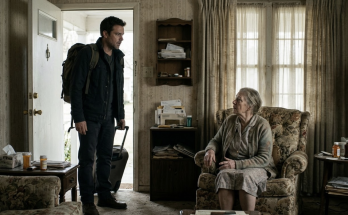
Part 1: The Day My Husband Chose Presents Over His Family
My husband filled our SUV with Christmas presents for his parents and relatives until there was no space left for our four-year-old son or me. When I asked how we were supposed to travel, he casually suggested taking the bus, never imagining that his decision would change our marriage forever.
My name is Ellen, and I’d been married to Grant for six years. We lived in Anaheim, California, with our son Toby, and that morning we were preparing to spend the holidays with Grant’s parents.
“Hurry up, Ellen! We’re going to be hours late!”
Grant shouted from the driveway while I finished buttoning Toby’s winter coat. Our little boy was excited about visiting his grandparents and kept asking whether Grandma Barbara would have a present waiting for him.
I smiled and reassured him, although previous holidays had taught me not to expect much. Barbara always remembered the favorite foods of Grant and his nephews, but somehow overlooked Toby’s preferences.
My father-in-law, Walter, rarely spoke to me, while Grant became unusually obedient whenever his parents were around. Whenever I complained about their treatment, he insisted that spending a few days with his family shouldn’t require so much discussion.
“They’re my parents, Ellen. Can’t you make a little effort?”
To Grant, making an effort meant preparing meals for twelve people, cleaning afterward, and sleeping with Toby in an unheated guest room. It also meant smiling politely whenever Barbara questioned why we hadn’t given her another grandchild.
I’d hoped this Christmas might be different, but the driveway quickly proved otherwise. Grant had surrounded our black SUV with expensive presents, including an espresso machine for Walter, a gold necklace for Barbara, a gaming console for his nephew, and several gourmet gift baskets.
When I brought our two suitcases outside, Grant barely acknowledged them. He finished filling the trunk before stacking more boxes across the rear seats, including the space reserved for Toby’s car seat.
“Grant, where are Toby and I supposed to sit?”
He examined the packed vehicle for a moment before shrugging.
“Take the bus. There’s too much stuff, and I’m not unloading everything now.”
I stared at him, struggling to believe he expected me to travel for hours with a small child and two suitcases. When I mentioned Toby’s car seat, Grant dismissed the concern and accused me of complicating his plans.
Then Toby tugged my sleeve and asked the question that finally broke something inside me.
“Mommy, doesn’t Daddy want us to go with him?”
Grant simply explained that he needed to transport the presents, without considering how his answer might hurt our son. Looking at the beautifully wrapped boxes occupying every seat, I realized that our comfort and happiness had become less important than pleasing his parents.
Instead of arguing, I calmly picked up our luggage and took Toby’s hand. Grant seemed relieved when I said we’d arrange our own transportation, and he drove away after reminding me not to arrive late.
Two blocks from home, Toby asked whether we really had to take the bus. I knelt beside him and reminded him of the birthday wish Grant had dismissed as too expensive.
“Disneyland?”
“That’s right, sweetheart. Mommy’s been saving money.”
I bought two tickets on my phone and called a taxi. As Toby hugged me excitedly, I silenced another thoughtless message from Grant and realized that, for the first time in years, we were going somewhere simply because it would make us happy.
Part 2: Forty-One Missed Calls and a Family Secret
That afternoon, Toby hugged Mickey Mouse with a happiness I hadn’t seen in months. Watching him enjoy himself, I sat on a nearby bench and cried, not because I regretted leaving Grant behind, but because I finally felt free to make a decision without asking his permission.
For six years, I’d tried to convince my husband that Toby and I deserved a meaningful place in his life. A few hours at Disneyland reminded me that we could create wonderful memories without waiting for him to choose us.
Later, we stopped at a café, where Toby sat happily eating chocolate with Mickey Mouse ears perched on his head. He asked whether we could ride another roller coaster the following day, then wondered if we should buy his father a present.
“Can we get Daddy something too?”
The question hurt because Toby still loved Grant without understanding the selfishness behind his decision that morning. To our son, his father was also the man who taught him to ride a bicycle and bought him ice cream on hot afternoons.
“Of course, sweetheart. We can choose something for him.”
Toby immediately decided that a keychain would be perfect. While he finished his cocoa, I checked my phone and discovered forty-one missed calls: nineteen from Grant, nine from Barbara, three from an unfamiliar number, and ten from Walter.
Walter’s calls surprised me most because he’d barely spoken to me throughout our marriage. Nevertheless, I ignored the messages for the moment and spent the remaining afternoon enjoying the park with Toby.
We rode the spinning teacups twice, laughing when he compared them to a washing machine. By eight that evening, he was asleep in our hotel room, holding a stuffed Goofy against his chest.
I finally listened to the voicemails while sitting beside the window. Grant’s messages progressed from irritation to anger, while Barbara complained that everyone was waiting and the family dinner was getting cold.
Then I heard Walter’s message, recorded at 6:52 p.m. His voice sounded unusually serious, and his request immediately caught my attention.
“Ellen, it’s Walter. I need to speak with you privately, without Grant or Barbara. Please call me when you can. It’s about your mother’s money.”
My mother had died four years earlier, when Toby was still a baby. She’d left me slightly more than $200,000 from the sale of her modest home in Fresno, and Grant had persuaded me to use the inheritance toward a larger family house.
He’d explained that his parents would co-sign our mortgage and that the property would belong to all of us. Trusting my husband, I’d signed a stack of documents without carefully examining every detail.
At nine o’clock, I called Walter, and he answered immediately. After asking whether Toby was safe, he apologized for years of remaining silent while Barbara and Grant treated me poorly.
“Tonight, Grant told Barbara he’d handle you when you arrived. He said you’d eventually give in, just as you always do.”
Walter explained that Barbara had mentioned how fortunate they were that my mother’s money had helped them keep their own home. When I asked what she meant, his answer left me struggling to breathe.
“Grant didn’t use your inheritance for the down payment he promised. He transferred $190,000 to pay off our mortgage.”
Walter then revealed that the Anaheim house wasn’t legally mine at all. The deed listed Grant and Barbara as owners, even though I’d been contributing to the mortgage under the belief that I owned part of the property.
He promised to send me the records and urged me to contact an attorney. Ninety seconds after our conversation ended, an email appeared in my inbox containing eleven attachments that would expose the truth about my marriage.
Part 3: The Documents That Exposed My Husband
I spent most of that night examining Walter’s attachments, keeping the bathroom light on so I wouldn’t disturb Toby. Every document revealed another detail about how Grant had handled the inheritance my mother intended to protect my future.
One bank record showed money leaving my mother’s estate account and entering an unfamiliar account. Another revealed that the same funds had been used to eliminate the mortgage on Barbara and Walter’s house in Bakersfield.
The county deed for our Anaheim property listed Grant and Barbara as owners, with my name appearing nowhere. Even more troubling was a signed statement Grant had provided to his mother’s lender, claiming that he alone had supplied the money.
I remembered sitting beside him in an office, signing papers because I trusted his explanations. I had believed we were building a secure home for our family, never suspecting that my inheritance had been redirected for his parents’ benefit.
The next morning, I contacted Joyce Whitmore, the attorney who’d handled my mother’s estate. She listened carefully as I described the Christmas trip, Walter’s confession, and the documents he’d forwarded.
“Ellen, don’t return home just yet. Stay where you are another day if possible, and I’ll meet you when you get back.”
I followed her advice and remained away for two more days. Toby rode Dumbo four times, enjoyed every moment of our unexpected vacation, and remained blissfully unaware of the financial deception I was beginning to uncover.
When we returned, Joyce met us at the airport wearing a gray suit. She led us to a small café, spread the documents across the table, and carefully explained what the records suggested.
“This isn’t simply a husband being inconsiderate. These transactions raise serious concerns about fraud and false financial representations.”
She explained that Grant appeared to have transferred inherited funds without my informed consent and misrepresented the source of money to a lender. Although I felt betrayed, I worried about what legal action might mean for Toby.
“I don’t want to destroy his father. Whatever Grant has done, Toby still loves him.”
Joyce assured me that pursuing the truth wasn’t the same as seeking revenge. Her priority was documenting the transactions, protecting my financial interests, and ensuring that future decisions were based on accurate information.
Within a week, she filed for legal separation and requested emergency restrictions on accounts connected to the property dispute. She also demanded a complete accounting of the money transferred from my mother’s estate.
A forensic accountant eventually discovered two additional transfers totaling $31,000. Those funds had been spent on a boat Grant had repeatedly claimed belonged to a coworker, bringing the total amount taken from my inheritance to $221,000.
Grant called me shortly after receiving the legal papers. For the first time in our marriage, his familiar confidence had been replaced by unmistakable fear.
“Ellen, this is ridiculous. You’re overreacting, and we can work everything out if you just come home.”
I explained that Toby and I were staying with my sister and that future communication should go through Joyce. Grant immediately accused me of taking his son away, but I reminded him that I wasn’t preventing appropriate contact.
“You can see Toby with a mediator present. I’m protecting him from the father who thought Christmas presents deserved his seat.”
For several moments, Grant said nothing. Then he quietly insisted that he hadn’t intended his suggestion about the bus to hurt us.
“I know you didn’t think about it, Grant. That’s exactly what frightens me.”
For years, I’d mistaken his thoughtlessness for something I could fix by being more patient. Now I understood that protecting my son required more than another promise that things would improve.
Part 4: The Settlement and a Grandfather’s Confession
The legal dispute continued for four months as Joyce gathered financial records and examined the property transactions. With the deeds, lender statement, and testimony from Walter contradicting Grant’s explanations, his attorney eventually advised him to settle rather than proceed to trial.
The final agreement transformed my financial situation. I received full ownership of the Anaheim house, Barbara’s name was removed from the deed, and the entire $221,000 taken from my mother’s inheritance was returned.
Part of the repayment came from selling Grant’s boat, while the remaining amount was secured through a lien on his retirement account. For the first time since discovering the deception, I felt that the money my mother had worked so hard to leave me was finally protected.
The custody arrangement also reflected the changes our family needed. I received primary custody of Toby, while Grant was given a generous visitation schedule after completing a parenting course and six months of counseling.
I never wanted Toby to believe that loving his father was wrong. What mattered was ensuring that Grant learned to treat our son as a person whose needs deserved attention rather than an inconvenience to be managed.
Walter’s decision to cooperate had consequences within his own marriage. Barbara was furious that he’d provided evidence against their son, and she stopped speaking to him for much of the following year.
Through Joyce, I learned that Walter had moved into the guest room and started attending church again. I didn’t know whether those changes would repair his relationship with Barbara, but they suggested that he was finally questioning choices he’d made for decades.