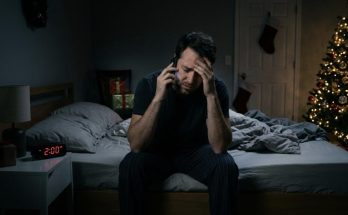
By noon, Andrea had called seven times.
Todd had called four.
I knew because I kept looking at my phone.
I wished I could stop.
Every time the screen lit up, my stomach tightened.
Part of me wanted to answer.
Part of me wanted to switch the phone off.
I did neither.
Grandma was still sitting at the kitchen table with Grandpa's documents.
William had explained what he'd discovered.
The house remained in her name.
The title inquiry hadn't resulted in a sale.
And the old memorandum pointed to an account that might still hold a substantial amount of money.
There was plenty to think about.
But Andrea's calls kept coming.
Then my cousin Melissa began sending messages.
She wanted to know whether Grandma was all right.
Then my uncle called.
After that, my aunt.
I looked at the list of names on my phone.
It was strange.
The day before, Grandma had been left on my porch.
Nobody seemed especially worried about the fact that she didn't have her medicine.
Nobody had asked whether she'd found somewhere comfortable to sleep.
Nobody had checked whether she'd eaten dinner.
Now everyone wanted an explanation.
Not about the porch.
Not about the airport.
About the documents.
I kept reading the messages.
People wanted to know what had happened at William's office.
They wanted to know whether Grandma had really changed her estate arrangements.
They wanted to know why Andrea no longer had the same authority.
The questions came in different words.
But they all seemed to circle the same concern.
Money.
I looked at Grandma.
She had spent the morning reading documents that concerned her own home.
She'd learned that her daughter and son-in-law had explored the possibility of selling it.
She'd heard words her husband had written years before his death.
And now the family was acting as though she owed them an immediate explanation for protecting herself.
I felt angry.
Then I felt guilty for being angry.
That was familiar.
I had always been good at finding reasons to feel guilty.
Grandma noticed me looking at the phone.
"More calls?"
I nodded.
She asked who had called.
I told her.
She listened.
Then she went back to the papers.
I asked whether she wanted me to answer anyone.
She thought for a moment.
"Not yet."
William had reminded us that financial and legal questions needed to be handled carefully.
Grandma didn't want a conversation where people interrupted each other.
She wanted the facts documented.
She wanted everyone to know what she'd decided.
And she wanted to decide when that discussion happened.
I put the phone down.
A few minutes later, it vibrated again.
At 12:26 p.m., Andrea sent another message.
She wanted Grandma to respond.
She complained that the situation was becoming unreasonable.
Then she said the family needed to discuss everything together.
I read the message to Grandma.
She held out her hand.
I gave her the phone.
She read it herself.
Then she looked at me.
"Would you send her an answer?"
"Of course. What should I write?"
Grandma thought for a moment.
She wanted Andrea to know she was safe.
She wanted to make clear that she would speak when she felt ready.
Nothing more.
I typed the message exactly as she asked.
I didn't add anything.
I didn't make it sound softer.
I didn't apologize.
I sent it.
Andrea responded almost immediately.
She said Grandma couldn't continue avoiding the conversation.
She reminded us that she and Todd had responsibilities.
Then she wrote that they'd been depending on Grandma.
I read that sentence twice.
Depending on her.
For what?
Grandma leaned toward the screen.
She read it too.
Then she asked the same question I had been thinking.
"What were they depending on me to do?"
I shook my head.
I didn't know.
Or maybe I was afraid I knew.
Andrea had already admitted that Todd's business was struggling.
She'd said there were debts.
She'd talked about selling Oakridge.
She'd described using the money for renovations and a better arrangement for everyone.
Now she was saying they'd been counting on Grandma.
I wanted to ask her exactly what that meant.
Had they made commitments?
Had they promised money to someone?
Had they told people Grandma was moving?
The source of my worry was the fact that I didn't know.
And I wasn't going to invent answers just because Andrea refused to provide them.
Grandma seemed to reach the same conclusion.
She didn't ask me to reply.
She didn't call Andrea.
She simply placed the phone on the table.
Then she returned to the letter George had written.
I watched her read it again.
She moved slowly through the pages.
Sometimes she looked at the photograph.
Sometimes she looked toward William's documents.
I remembered her words from the night before.
She had worried that people would accuse her of being confused.
Now she was making a careful choice about how to address them.
Not on my porch.
Not over a telephone.
Not in a room where Andrea could talk over everyone.
She wanted a proper conversation.
And she wanted William present.
Over the next two days, Grandma had time to think.
She didn't suddenly become cheerful.
She didn't pretend Andrea's actions hadn't hurt her.
But she was clear about what she wanted.
She would speak to her daughter.
She would hear what Andrea had to say.
And she wouldn't surrender the decisions she'd already made merely to end the disagreement.
I didn't try to persuade her.
That was something I had to learn.
I wanted to protect her.
But protecting Grandma didn't mean making her choices for her.
That was exactly what Andrea and Todd had been doing.
I had to remember the difference.
When Grandma agreed to the meeting, she chose William's office.
Andrea's house was out of the question.
So was mine.
Grandma didn't want another argument at my front door.
William agreed that a neutral office was appropriate, especially since property and legal matters were involved.
He wanted the conversation to be orderly.
He wanted important statements documented.
And he wanted everyone to understand that Grandma was making her own decisions.
I was grateful for that.
I'd already seen how quickly Todd could redirect a conversation.
He could make an accusation sound like a practical concern.
He could make someone else's property seem like a family responsibility.
Andrea could do something similar.
She could become emotional and make me feel guilty before we'd even reached the real issue.
I wasn't prepared to spend another morning standing between them.
The meeting was scheduled.
Grandma knew Andrea and Todd might be upset.
She also knew she wanted answers.
On the day of the meeting, Grandma dressed carefully.
She chose a cream-colored blouse.
Black trousers.
And the little gold earrings Grandpa George had given her for their fortieth wedding anniversary.
I noticed the earrings right away.
I'd seen her wear them before.
But that day they seemed especially important.
They were one more reminder of George.
His letter.
His photograph.
The documents he'd preserved.
The arrangements he'd made for her home.
Grandma looked in the mirror before we left.
I watched her smooth the front of her blouse.
She didn't look helpless.
She didn't look confused.
She looked like a woman preparing to discuss something that belonged to her.
Because it did.
Her house.
Her financial affairs.
Her future.
We arrived at William's office before Andrea and Todd.
Grandma settled into her chair.
She placed her handbag beside her.
William had the relevant documents ready.
I sat quietly.
I thought about the last time we'd been in that office.
Grandma had been reading through revocations and estate instructions.
I'd been afraid Andrea would blame me for everything.
Now I was still afraid of that.
But the fear didn't feel as powerful.
I had watched Grandma make her own decisions.
I had watched her ask careful questions.
And I had heard Grandpa's letter.
Those things mattered more than Andrea's accusations.
We waited.
Andrea was late.
Five minutes passed.
Then ten.
Then fifteen.
By the time she and Todd arrived, they were twenty minutes behind schedule.
Andrea entered first.
Todd followed.
I watched my sister's face when she saw Grandma.
She looked at the blouse.
The earrings.
The documents on William's desk.
Then she looked at me.
I didn't say anything.
She sat down.
Todd took the seat beside her.
Grandma was already waiting.
She didn't complain about their lateness.
She didn't remind them of the airport.
She didn't mention the porch.
She simply folded her hands.
Andrea shifted in her chair.
Then she looked at her mother.
"Mom, I don't even know how to start this conversation."
Grandma answered calmly.
"Start by telling me what actually happened."
Andrea looked at Todd.
He stared at the table.
I watched the exchange.
It lasted only a moment.
But I recognized it.
Andrea wanted him to help explain.
Todd apparently didn't want to be the first person to speak.
William waited.
Grandma waited.
I kept my hands together in my lap.
For once, nobody rushed to fill the silence.
Finally, Andrea began.
She admitted that she and Todd had been having money problems.
Grandma didn't react.
She waited for Andrea to continue.
Todd remained quiet.
Andrea explained that his business had lost two important contracts.
I looked at him.
He still wasn't looking at Grandma.
Andrea said the lost work had created financial pressure.
They had debts.
Their own house needed repairs.
And they were trying to find a way to manage the coming year.
I listened carefully.
The explanation was different from what I'd heard on the porch.
There, Andrea had talked about the Oakridge sale as though it were a sensible improvement for everyone.
Now she was admitting that they needed money.
Not Grandma.
Them.
Todd's business was struggling.
Their house needed work.
Their debts had become difficult.
I thought about the preliminary title inquiry.
Eight months earlier.
Long before Grandma had been left on my porch.
Someone had already been asking what would happen if she became unable to handle the Oakridge property.
I looked at Andrea.
She seemed uncomfortable.
I couldn't tell whether it was shame or fear.
Maybe she was finally realizing how her actions sounded.
Maybe she was still hoping Grandma would agree to help.
I couldn't know.
But I remembered something Grandma had said during our first visit to William.
She'd wanted every account reviewed.
Every authorization.
Every person with access.
Not because she wanted to hurt anybody.
Because she'd realized she couldn't keep making decisions based only on what other people told her.
Andrea kept her eyes on the table.
Grandma listened.
She didn't interrupt with accusations.
She didn't offer to pay the debts.
She didn't promise to reconsider the documents.
And she didn't tell Andrea that losing two contracts justified what had happened.
I watched her hands.
They were folded neatly in front of her.
The gold earrings moved slightly when she turned her head.
I thought about George's old photograph.
The two of them standing together at Oakridge.
I thought about how he had made sure the house belonged to Evelyn.
And I understood why the meeting mattered.
Andrea wasn't simply explaining a business problem.
She was being asked to explain why that problem had become a reason to make plans involving her mother's home.
I could almost hear the old version of myself trying to smooth everything over.
Andrea was under pressure.
Todd had lost contracts.
They'd been worried.
They hadn't known what else to do.
Those explanations might have helped me understand their situation.
But understanding wasn't the same as excusing it.
Grandma had taught me that without giving a speech.
She'd shown me by refusing to answer every phone call.
By choosing the office.
By asking William to document important decisions.
By reading her own papers.
And by allowing Andrea to speak without immediately rescuing her from the consequences of her words.
I looked at Grandma again.
She was listening to her daughter.
Really listening.
But there was no sign that she intended to hand over the envelope or take back what she'd signed.
I thought of how frightened I'd been when the family first started calling.
I'd imagined shouting.
Accusations.
People taking sides.
I had wanted desperately to avoid another argument.
Now I understood that the argument wasn't the most important thing.
The truth was.
Andrea had finally admitted that Todd's business had lost two major contracts.
She'd admitted there were debts.
She'd admitted their house needed repairs.
And she'd admitted they were worried about getting through the next year.
Those were real problems.
But they were Andrea and Todd's problems.
Grandma's house had never become theirs simply because they needed money.
I looked down at my hands.
Then I looked back at William's desk.
The documents were still there.
Grandma's signature was still on them.
Evelyn Brooks.
The name hadn't changed.
The ownership hadn't changed.
And Grandma's right to choose hadn't changed either.
For years, I had believed that keeping a family together meant preventing anyone from becoming angry.
That day, sitting in William's office, I began to see how wrong I'd been.
Sometimes keeping the peace only meant keeping the same people in control.
Grandma had stopped doing that.
And I was finally learning how to let her.
Click here to continue reading: PART 5: My Sister Finally Admitted Why She Needed Grandma’s House Sold, but the More She Explained, the Less Her Story Made Sense to Me
I Thought My Sister Had Only Abandoned Our Grandmother Until a Lawyer Showed Us What She Had Been Asking About Behind Our Backs
Part 4 of 15