Mr. Henderson contacted me several days later.
Additional financial information had arrived.
I went to his office after arranging time away from work.
He had prepared a preliminary account history.
The pages were arranged by date.
Several transactions had been marked for discussion.
I sat down.
“Have you been able to identify where the withdrawals went?”
“Some of them.”
He showed me records associated with a receiving account controlled by my parents.
Then he indicated several payments that appeared to involve vehicle-related expenses.
I stared at the documents.
The information wasn't complete enough to establish the purpose of every dollar.
But there were now connections that couldn't be dismissed as coincidence.
“Do these concern Steven's vehicles?”
“Some appear consistent with that possibility. We still need further documentation.”
I nodded.
I appreciated his precision.
He wasn't making claims beyond what he could support.
I asked whether Dad had provided any accounting explaining how the withdrawals benefited me.
“No such accounting has been supplied to us.”
I looked at the transaction history.
Years of withdrawals.
Amounts that had once belonged to a financial provision specifically created for me.
I asked Mr. Henderson to explain the available next steps.
He discussed a formal request for an accounting.
He explained that any demand for repayment would need to be supported by the records and the terms of the arrangement.
He also explained that litigation could involve additional expenses and uncertainty.
I listened.
I wasn't interested in making a dramatic decision simply because I was angry.
I wanted something practical.
An explanation.
Protection of whatever remained.
Recovery of funds that had been improperly used, if the evidence established that.
Mr. Henderson agreed that those were reasonable objectives.
I left his office carrying the updated documents.
That evening, Mom sent another message.
“Please come home. We need to talk.”
I looked at the word home.
I hadn't called that house home for five years.
I didn't know whether I ever would again.
I agreed to meet them.
Not because I expected an apology.
Because I wanted to give them an opportunity to explain the records before the matter proceeded further.
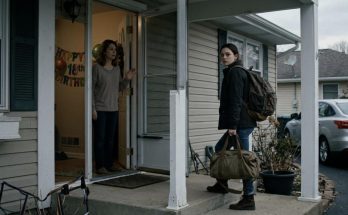
When I arrived, the house looked familiar.
The front entrance was the same one I remembered.
I stood outside for a moment.
Five years earlier, I had walked away carrying two duffel bags.
This time, I carried a folder.
Mom opened the door.
“Adam.”
She looked tired.
I nodded.
“Hello.”
She moved aside.
That small movement brought back a memory so clearly that I almost stopped walking.
I stepped inside.
Dad was waiting near the dining table.
Steven wasn't there.
I didn't ask where he was.
My mother offered me something to drink.
“No, thank you.”
I placed the folder on the table.
Dad looked at it.
“What's all that?”
“The documents from Grandpa's attorney.”
Mom sat down slowly.
Dad remained standing for a moment.
Then he took his seat.
“We don't need to turn this into some kind of legal confrontation.”
I opened the folder.
“Then explain what happened.”
He looked toward Mom.
I removed the original trust documentation.
“Grandpa established seventy-five thousand dollars for each of us.”
Mom lowered her eyes.
Dad nodded reluctantly.
“That's right.”
“And I was supposed to receive access when I turned eighteen.”
He didn't answer.
I placed the next document on the table.
“You contacted his attorney two months after my eighteenth birthday.”
Dad frowned.
“I was concerned about the situation.”
“You told them I wasn't willing to participate.”
“You'd walked out of the house.”
“I didn't know there was anything to participate in.”
Mom reached for a tissue.
I looked at her.
“Did you know about my trust?”
She nodded.
“How long had you known?”
“Since your grandfather made the arrangements.”
I swallowed.
“Then why didn't you tell me?”
She looked toward Dad.
He answered instead.
“We thought you weren't ready.”
I stared at him.
“I was supporting myself.”
“You were angry with us.”
“That doesn't explain why you kept the money from me.”
Dad leaned back.
“You'd made it clear you didn't want to be part of this family.”
I shook my head.
“I moved out because of how you treated me.”
Mom began crying quietly.
I placed the account statements beside the original documents.
“Grandpa's money wasn't yours to withhold because you were unhappy with me.”
Dad looked down at the pages.
I pointed toward the original deposit.
Then I showed him the later withdrawals.
Finally, I indicated the most recent balance.
“Where did the rest go?”
He studied the statements.
For several seconds, nobody spoke.
Mom's tissue moved against her cheek.
Dad finally answered.
“We had expenses.”
I waited.
“What expenses?”
“Family expenses.”
I looked at him.
“Mine?”
He shifted.
“Some things were complicated at the time.”
I pointed toward a transaction.
“This one was transferred to an account you controlled.”
He didn't deny it.
I moved my finger toward another entry.
“And these appear to be connected with vehicles.”
Mom closed her eyes.
Dad looked annoyed.
“You've been digging through our finances?”
“I've been investigating my inheritance.”
“There's a difference,” he said.
“Yes. There is.”
I kept my voice calm.
“Your finances are yours. My inheritance was mine.”
He rubbed his face.
“We always intended to make things right.”
I stopped moving.
There was something important about that sentence.
“Make what right?”
He realized what he had said.
Mom began crying harder.
I waited.
Dad looked toward the window.
Finally, he spoke.
“There were times when we needed money temporarily.”
I nodded.
“And you took it from my trust?”
He didn't answer immediately.
“We thought we'd be able to replace it.”
I stared at him.
For a moment, the room seemed unusually quiet.
Not because I hadn't considered that possibility.
Because I was finally hearing him acknowledge it.
“How much?”
“We'd have to look at everything.”
“Did you keep records?”
“Some.”
“Did you ever intend to tell me?”
Mom interrupted.
“Adam, please understand. We weren't trying to hurt you.”
I turned toward her.
“What did you think would happen when I left with nothing?”
She looked down.
I continued.
“You knew Grandpa had provided money for me.”
She wiped her face.
“We thought you'd manage.”
I stared at her.
That was the explanation.
The same explanation that had followed me throughout childhood.
I would manage.
I always managed.
And because I managed, somebody else could receive whatever attention or assistance had originally been intended for me.
I thought about my grandfather's letter.
He had warned me against believing that responsibility made me less deserving of affection.
My parents had apparently treated responsibility as a reason to take even more from me.
“Did Steven know where the money came from?” I asked.
Dad shook his head.
“Not necessarily.”
“What does that mean?”
“He wasn't involved in the financial decisions.”
I looked at the statements.
“Were some of his expenses paid from my account?”
Dad hesitated.
Mom began speaking before he answered.
“We were helping him get established.”
I looked at her.
“With money Grandpa left me?”
She didn't answer.
I felt my throat tighten.
There was no need to shout.
I didn't want another argument about whether Steven deserved assistance.
Grandpa had provided assistance for him too.
The question was why my parents had decided that one son's future could be financed at the expense of the other.
Dad leaned forward.
“We're in a difficult position now.”
“I know.”
“We can't simply produce that amount of money.”
“I know.”
“Then what do you expect us to do?”
I looked at him.
“Provide a complete accounting.”
He frowned.
“What?”
“I want records showing what was withdrawn, when it was withdrawn, and what it was used for.”
Mom looked frightened.
Dad shook his head.
“You're making this unnecessarily formal.”
I closed the folder halfway.
“You had five years to explain it informally.”
Neither answered.
I continued.
“The attorney will contact you about the documents.”
Mom reached toward me.
“Please don't do this.”
I moved my hand away.
“I need to know what happened.”
“Your father and I could lose the house.”
I looked at her.
A few days earlier, that possibility had filled me with guilt.
Now I understood that the situation couldn't be resolved by asking me to surrender more money.
“That's a problem you need to address with the bank.”
Dad became angry.
“You're talking about the house you grew up in.”
“Yes.”
“Does that mean nothing to you?”
I looked around the room.
It meant plenty.
That was why returning had been difficult.
I remembered the birthdays.
The broken bicycle chain.
The science fair trophy.
I remembered the doorway where Mom had stood when I left.
But none of those memories made me responsible for their current debts.
I gathered the documents.
Dad watched me.
“What happens if we can't repay anything?”
“Mr. Henderson will explain the options after the accounting is completed.”
Mom started crying again.
I stood.
For once, I didn't feel obligated to remain until she stopped.
I picked up my folder.
Then I remembered something.
I removed a copy of Grandpa's letter and placed it on the table.
Mom recognized the handwriting immediately.
I saw her expression change.
“He wrote that to me before he died,” I said.
She picked it up.
Her eyes moved across the page.
Dad remained seated.
I waited until she finished reading.
Then I spoke.
“He trusted you.”
Mom lowered the paper.
I couldn't think of anything else I needed to say.
I walked toward the front entrance.
Nobody offered me money.
Nobody produced a complete accounting.
Nobody could return the years when I had struggled without knowing Grandpa had intended to help me.
But I had finally heard my father acknowledge that money had been taken with the intention of replacing it later.
That admission mattered.
Outside, I placed the folder on the passenger seat of my car.
I sat behind the steering wheel.
My hands rested against it.
I remembered leaving that same house at eighteen.
Back then, I had believed walking away meant accepting that I would never receive anything from my parents.
Now I understood that the matter wasn't about receiving something from them.
It was about establishing what had happened to something Grandpa had already given me.
I drove home.
That evening, I wrote down what my parents had said.
I preserved the notes for Mr. Henderson.
Then I returned Grandpa's original letter to its envelope.
I looked at the handwriting one last time.
My parents' financial problems remained unresolved.
The full extent of the withdrawals still needed to be established.
But I had made my decision.
There would be a proper accounting.
And I wasn't going to pay fifteen thousand dollars to make everybody forget why I had asked for one.
Click here to continue reading: PART 13: When My Parents Were Finally Required to Explain the Missing Money, Their Own Financial Records Revealed More Than Their Excuses Ever Had
After Five Years Without My Parents, I Sat Across From Them and Realized They Had Not Invited Me There to Apologize
Part 12 of 15