The settlement took longer than I originally expected.
There were additional documents to review.
There were disagreements over particular transactions.
There were practical questions concerning how much my parents could repay immediately and what would happen to the remaining obligation.
Mr. Henderson handled the correspondence.
I reviewed the information whenever he needed a decision from me.
I continued going to work.
I continued paying my rent.
I continued buying groceries and taking care of the ordinary details of my life.
The investigation no longer occupied every available moment.
That was a relief.
For several weeks, I had felt as though my childhood had moved into my apartment and spread itself across my kitchen table.
There were papers everywhere.
Numbers.
Dates.
Reminders of things I would have preferred not to remember.
Eventually, the documents became something I could put away at the end of the day.
I didn't need to examine them every evening.
I didn't need to keep asking myself whether pursuing the money was justified.
That question had been answered.
One afternoon, Mr. Henderson called.
“We've reached an agreement on the remaining trust balance.”
I stopped what I was doing.
“It's going to be released?”
“Yes. The necessary administrative arrangements are being finalized.”
I sat down.
He explained what I needed to sign.
I arranged to visit his office.
When I arrived, the atmosphere felt different from my first appointment.
The thick file was still there.
So was the calculator.
But this time, the documents concerned transferring control to me.
Mr. Henderson placed the relevant forms on his desk.
I read them carefully.
My name appeared where it should have appeared five years earlier.
My address was correct.
The account information was mine.
There was no requirement for my father's approval.
No instruction directing correspondence through my mother.
I signed.
The amount remaining was nowhere near what Grandpa had originally provided.
It was approximately thirteen thousand dollars.
But it belonged to me.
And for the first time, nobody was permitted to redirect it simply because someone else needed help.
I put the pen down.
“Thank you.”
Mr. Henderson smiled.
“Your grandfather would have wanted the arrangements properly administered.”
I looked at the completed documents.
I thought about Grandpa sitting somewhere years earlier, discussing the futures of two boys.
He couldn't have known what our lives would become.
He couldn't have predicted every financial difficulty.
But he had wanted to give us equal opportunities.
I was finally receiving part of what he had intended.
The rest of the settlement addressed the funds that had been improperly used.
My parents agreed to a written obligation rather than relying on another informal family promise.
The arrangement provided for repayment through available proceeds and future payments, according to their financial circumstances and the final accounting.
It wasn't an immediate recovery of everything.
There was no sudden appearance of sixty thousand dollars.
My parents hadn't secretly become wealthy.
Their financial problems were real.
But the obligation was finally documented.
And it wouldn't disappear simply because they preferred not to discuss it.
I considered that important.
Mr. Henderson explained the terms once more.
I asked several questions.
Then I signed the necessary documents.
I didn't feel victorious.
Mostly, I felt tired.
But it was a different kind of tiredness from what I had experienced while working and attending college.
Back then, I had often been exhausted because I didn't have enough choices.
Now I was exhausted because I had finally exercised one.
I had decided not to surrender.
When I returned to my apartment, I called Mark.
“It's settled?”
“The initial release is being completed. They've also agreed to a formal repayment arrangement.”
He sounded pleased.
“That's good.”
“Yeah.”
I sat on the couch.
“I wish Grandpa was here.”
Mark became quiet.
Then he said something that stayed with me.
“He gave you more than the money, Adam.”
I looked toward the cupboard containing the old box.
“He gave you something worth standing up for.”
I swallowed.
We spoke for another few minutes.
Then I thanked him.
He had been there when I left the restaurant.
He had listened when I discovered the trust.
He had reminded me that family relationships didn't make another person's financial decisions my responsibility.
He hadn't asked for anything in return.
That mattered.
A few days later, the remaining trust funds reached the account under my control.
I checked the balance.
Then I checked it again.
I didn't buy anything.
I didn't immediately change my plans.
I simply sat at my kitchen table looking at the confirmation.
I thought about how easily thirteen thousand dollars could have helped me at eighteen.
Even that remaining amount would have made a significant difference.
The original seventy-five thousand could have changed much more.
I allowed myself to feel sad about that.
I didn't try to pretend that everything had worked out perfectly.
It hadn't.
I had lost opportunities.
I had spent years carrying financial anxiety that might have been reduced.
And no settlement could provide another nineteenth birthday.
But I also recognized something important.
The person sitting at that kitchen table had managed to build a stable life anyway.
My parents hadn't given me that stability.
Their decisions had made achieving it harder.
Grandpa had tried to help.
And now, although much later than he intended, I was finally in a position to protect his gift.
I transferred the money into savings.
I didn't need it for an emergency.
I didn't intend to use it for somebody else's emergency either.
It was security.
Exactly the kind of security Grandpa had wanted me to have.
Meanwhile, my parents proceeded with their decision concerning the house.
They couldn't maintain the existing financial obligations indefinitely.
Selling the property became the practical alternative to allowing the situation to deteriorate further.
Aunt Linda kept me informed without asking me to intervene.
She told me there were difficult conversations.
Dad was frustrated.
Mom was emotional.
Steven was trying to adjust to living without the car.
I listened.
I hoped their circumstances improved.
But I didn't offer to cover the difference between their obligations and their available money.
When Dad eventually called, his voice sounded different.
“We're going ahead with the sale.”
I sat down.
“Okay.”
He was quiet for a moment.
Then he said that he had never expected things to reach this point.
I believed him.
My parents probably hadn't imagined that continually finding money for Steven would eventually threaten their home.
They had always expected another solution to become available.
Another loan.
Another source of money.
Another person willing to help.
This time, there hadn't been one.
“It's difficult,” Dad said.
“I know.”
He sighed.
“We made some bad financial decisions.”
I waited.
It was the closest he had come to admitting that the situation hadn't been caused by my refusal to provide fifteen thousand dollars.
Then he added something else.
“We shouldn't have used your grandfather's money the way we did.”
I closed my eyes.
For several seconds, I couldn't respond.
I had imagined hearing those words many times since the investigation began.
They didn't feel the way I expected.
There was no overwhelming relief.
No sudden disappearance of anger.
Just a quiet recognition that he had finally said something true.
“No,” I answered. “You shouldn't have.”
He remained silent.
Then he said he was sorry.
His apology was brief.
Uncomfortable.
It didn't address every birthday or school event.
It didn't explain why he had described me as unwilling to participate in my inheritance arrangements.
But it acknowledged something he had previously refused to acknowledge.
I accepted that much.
“Thank you for saying it.”
He seemed to expect something more.
Perhaps reassurance.
Perhaps a promise that everything would return to normal.
I didn't offer one.
Normal had been the problem.
After we ended the call, I sat quietly.
I thought about how long I had waited for Dad to admit that he had treated me unfairly.
Now he had admitted one part of it.
I was glad.
But I also understood that an apology didn't require me to abandon boundaries I had worked hard to establish.
We could speak occasionally.
We could have respectful conversations.
Anything more would depend on what happened over time.
Not on another promise.
Steven contacted me not long afterward.
He had finally found work.
It wasn't the kind of position he had originally hoped to obtain, but it provided income.
He was arranging transportation within what he could afford.
I was pleased to hear that.
“That's good news,” I told him.
“Yeah. It's not much, but it's something.”
I understood that feeling.
My first years of employment hadn't been particularly glamorous either.
Sometimes a job was simply a way to meet your responsibilities.
There was nothing shameful about that.
Steven hesitated.
“Dad told me some of your money was used for my expenses.”
I became quiet.
He continued.
“I didn't know that at the time.”
I looked toward the cupboard.
“I understand you weren't necessarily involved in the decisions.”
“I really didn't know.”
His voice sounded sincere.
I didn't have any evidence that he had knowingly participated in redirecting my trust.
My parents had controlled the financial arrangements.
They had made the decisions.
I wasn't going to assign Steven responsibility for actions I couldn't establish he had taken.
But I also wasn't going to pretend his behavior had never affected me.
“I appreciate you telling me,” I said.
He asked whether we could eventually get along better.
I considered the question.
“Maybe.”
There was a small silence.
“I don't want us competing over everything anymore,” I added.
“Neither do I.”
I hoped he meant it.
I didn't promise that our relationship would immediately become close.
We had years of difficult history.
We would both need to approach things differently.
He understood.
Before ending the call, he apologized for asking me to help pay for the car.
“I shouldn't have put that on you.”
I nodded, although he couldn't see me.
“No, you shouldn't have.”
It felt good to be able to say that without becoming angry.
We ended the conversation on better terms than we had begun it.
Several weeks later, the house sale moved forward.
My parents had to make arrangements for somewhere more affordable to live.
The financial settlement was addressed according to its terms and the available proceeds.
There were still obligations that wouldn't disappear overnight.
But the situation had become more realistic.
They could no longer sustain the lifestyle they had maintained by borrowing and redirecting money.
They had to make choices based on what they actually possessed.
I hoped that would eventually help them.
I didn't need them to suffer.
I simply needed them to stop expecting me to prevent the consequences of their decisions.
Mom called after they had begun sorting their belongings.
She told me she had found some old things from my childhood.
Among them was the science fair trophy.
I stopped moving when she mentioned it.
“The trophy?” I asked.
“Yes.”
She described it.
I recognized what she was talking about.
For years, I had assumed it had been discarded or forgotten entirely.
Apparently, it had survived.
“Would you like it?”
I thought about the restaurant.
I remembered Dad looking confused when I asked whether he remembered the science fair.
I remembered how much that had hurt.
“Yes,” I answered.
“I'd like to have it.”
We arranged for me to collect it.
When I saw Mom, she handed me a small box.
The trophy was inside.
It looked smaller than I remembered.
A little worn.
Nothing particularly impressive.
But I remembered the boy who had carried it home.
He had been so proud.
He had wanted his parents to ask how he had won it.
He had wanted somebody to recognize how much work he had done.
Grandpa had called.
That was the memory I chose to keep.
Mom stood beside me while I examined it.
“I should have made a bigger deal about that,” she said.
I looked at her.
“Yes.”
She nodded.
“I know.”
For once, I didn't tell her it didn't matter.
It had mattered.
And hearing her acknowledge that was more meaningful than pretending otherwise.
I took the trophy home.
I placed it on a shelf near my desk.
Then I opened the box containing Grandpa's letter.
I removed the envelope and unfolded the paper.
The handwriting was still there.
His words hadn't changed.
I had.
At eighteen, I had believed that leaving my parents meant accepting that I wasn't important enough for them to miss.
At twenty-three, I understood that their treatment of me wasn't a reliable measure of my worth.
Their financial choices weren't proof that Steven deserved more.
Their failure to protect my inheritance didn't mean Grandpa's affection had been misplaced.
I had spent years hoping somebody would tell me that I mattered.
Now I was learning to make decisions that reflected it.
I put Grandpa's letter beside the trophy.
I looked at both for a while.
One represented an accomplishment my parents had barely noticed.
The other represented a future somebody had considered worth protecting.
Together, they meant more to me than any photograph of an expensive vehicle ever could.
Later that evening, I opened the cupboard where I kept my old belongings.
The two duffel bags were still among them.
I hadn't thrown them away.
They were ordinary bags.
There was nothing particularly remarkable about them.
But they had carried everything I thought I possessed when I walked away from my parents' house.
I had been frightened that morning.
I had been disappointed.
I had hoped somebody would stop me long enough to ask whether I was going to be all right.
Nobody had.
I touched one of the handles.
Then I closed the cupboard.
I no longer needed to imagine returning to that doorway and receiving a different response.
I had somewhere to live.
I had work I was proud of.
I had people who called because they wanted to know how I was doing.
I had savings that nobody else was entitled to spend.
And I had finally received acknowledgment of the financial provision Grandpa had intended for me.
My parents and I remained in occasional contact.
I didn't cut them off to punish them.
I didn't welcome them back without conditions either.
Trust would have to develop through consistent behavior.
I was willing to leave that possibility open.
But I wasn't going to spend another decade waiting for it.
On my next birthday, I didn't work an extra shift simply because I was worried about money.
I made plans with Mark.
I bought myself a chocolate cake.
It wasn't elaborate.
It wasn't expensive.
It was exactly the kind I wanted.
When I brought it home, I placed it on my kitchen table.
For a moment, I thought about turning sixteen.
Then I thought about Grandpa.
I smiled.
There was no one there asking whether another person would prefer a different cake.
Nobody needed me to surrender the occasion.
Nobody was making me feel selfish for enjoying it.
It was my birthday.
That was enough.
I cut myself a slice.
Afterward, I walked toward my desk and looked at the trophy.
Grandpa's letter rested beside it.
I had once believed that being a good son meant giving up whatever my parents decided somebody else needed more.
I didn't believe that anymore.
I could care about my family without financing their mistakes.
I could love my brother without accepting less than him.
I could acknowledge an apology without forgetting what had happened.
And I could protect my future without asking anyone's permission.
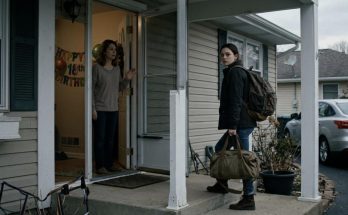
Five years earlier, I had walked out of that house carrying two bags.
I had believed I was leaving everything behind.
But Grandpa had left something that followed me long after that morning.
Not just an inheritance.
A reminder that my life mattered independently of what anybody else demanded from it.
It had taken me years to understand that.
I finally did.
The End
Read more original stories on readstoryus.
After Five Years Without My Parents, I Sat Across From Them and Realized They Had Not Invited Me There to Apologize
Part 15 of 15