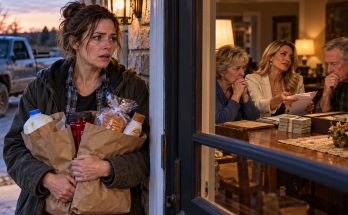
My only son left me stranded at Atlanta Airport just days after my heart surgery because he claimed he was “too busy” to pick me up. I simply said, “Okay,” and walked away. Four hours later, my phone showed 48 missed calls from him and his wife.

PART 1: THE SON WHO LEFT ME STRANDED AFTER HEART SURGERY

The first thing my son said when I finally answered his phone call wasn’t an apology or a question about my health. Instead, Phillip sounded furious, demanding to know why I’d ignored him and his wife for the past four hours.

“Mom! Where have you been? We’ve called you forty-eight times!”

My name is Margaret, and at sixty-seven, I’d spent most of my life putting my family before myself. Even after losing my husband, Robert, I continued doing everything possible to make life easier for our son, his wife, and their two children.

But that afternoon, I was lying in a medical center outside Atlanta, recovering from an ordeal that had left me frightened and physically exhausted. Only four hours earlier, Phillip had refused to collect me from the airport after my heart surgery.

“I’m at a medical center, Phillip. The doctors are looking after me.”

His anger immediately turned to confusion, and I heard my daughter-in-law, Diana, questioning him in the background. Neither of them seemed to understand why I needed medical attention when I’d already told them my operation had been successful.

“Why didn’t you call me, Mom? I would’ve helped if I’d known.”

I closed my eyes, remembering the conversation we’d had when I arrived at Atlanta’s airport. I’d asked him for a ride because I was exhausted after traveling home from Cleveland, where I’d undergone a serious heart procedure.

“I did call you, Phillip. I asked you to pick me up at the airport.”

He became quiet, apparently remembering how impatiently he’d dismissed my request. When he finally spoke again, he insisted that he hadn’t realized my condition was so serious.

“You told me the surgery went well! How was I supposed to know you still needed help?”

I reminded him that successful surgery didn’t mean someone could immediately return to normal activities. He’d known about my operation, received my travel information, and still treated my request for transportation as an inconvenience.

For forty-one years, I’d protected Phillip from uncomfortable feelings, often making excuses whenever he disappointed me. Even now, part of me wanted to reassure him that everything was fine, but I no longer had the strength to pretend.

“Where are you exactly? I’ll come and get you right now.”

I glanced toward the nurse checking my monitor and explained that the hospital staff were arranging appropriate recovery assistance. For once, I was receiving help from people who understood that I needed care rather than another lecture about planning ahead.

“I’m safe, Phillip. I’m exhausted, and I’ll speak with you when I’m feeling stronger.”

I ended the call before he could argue, then turned my phone over and examined the notifications. Phillip had called thirty-one times, Diana had called seventeen, and twenty-six unread messages were waiting for me.

Their messages had grown increasingly frantic, but one from Diana made me particularly uncomfortable. Instead of expressing concern about my recovery, she’d demanded that I answer because my silence supposedly wasn’t funny.

Then I noticed a message from my sixteen-year-old granddaughter, Madison. Unlike her parents, she wasn’t angry that I hadn’t answered my phone.

“Grandma, are you okay? Dad says you had heart surgery. Why didn’t anyone go with you?”

Her question brought tears to my eyes because it was something the adults should have asked weeks earlier. I assured her that I was safe and receiving medical attention, but she immediately asked whether her father had known about my condition.

I hesitated before answering because I’d spent years protecting Phillip from criticism. This time, however, I decided my granddaughter deserved the truth.

“Yes, sweetheart. Your dad knew I was having a heart procedure, and he knew when I was coming home.”

Madison replied almost immediately, and her simple words affected me more deeply than all the angry messages from her parents.

“Then he should’ve picked you up.”

I pressed the phone against my blanket and cried, realizing how long I’d accepted treatment that even a teenager recognized as unfair. I had spent decades making sure everyone else was comfortable, even when doing so meant ignoring my own needs.

The following morning, my doctors confirmed that I could continue recovering at home with professional assistance. With help from my recovery coordinator, Helen Brooks, I arranged for a caregiver named Susan to assist with meals, medication, and daily activities.

I had enough savings to pay for the service, thanks to the careful financial planning Robert and I had done throughout our marriage. What I could no longer afford was the emotional cost of pretending that having family nearby guaranteed someone would care for me.

But when I finally returned home, I discovered that Phillip and Diana were already expecting me to resume the responsibilities I’d handled before surgery, and their next request revealed just how little my recovery mattered to them.

PART 2: THE FAMILY THAT EXPECTED ME TO KEEP SERVING THEM

When I finally returned home after my heart surgery, I expected to spend the next several weeks resting and rebuilding my strength. My recovery coordinator had arranged for a professional caregiver named Susan, who would help me manage medications, prepare meals, and handle everyday tasks until I could safely care for myself again.

Susan immediately noticed several laundry baskets sitting near my hallway. When I explained that they belonged to my grandchildren, Madison and Caleb, she looked surprised that I was still worrying about their chores.

“Those aren’t your responsibility right now, Margaret. They can wait until someone comes to collect them.”

Her words made me realize how unusual it felt to leave something unfinished for my family. For years, I’d organized my days around their forgotten homework, transportation problems, laundry, and last-minute requests, rarely considering whether I had enough time for myself.

Later that afternoon, I examined the paperwork I’d prepared before traveling to Cleveland. Among the envelopes were a birthday card for Madison, an $850 check for Caleb’s soccer camp, and documents concerning a home improvement project Phillip and Diana wanted me to help finance.

Even while preparing for a frightening heart operation, I’d continued arranging financial assistance for everyone else. Looking at those papers reminded me of how often I’d placed my family’s convenience ahead of my own health.

Six months earlier, Diana had asked me to babysit the children during a weekend when I already had a cardiology appointment. When I explained the conflict, she’d dismissed the appointment as something I could easily reschedule.

“Margaret, it’s only a routine visit. Phillip and I have already booked our hotel, so we really need you to help.”

I’d postponed the appointment by eleven days because I didn’t want to disappoint them. When I eventually saw my cardiologist, additional tests revealed the heart problem that ultimately required surgery.

Remembering that conversation, I returned the soccer camp check to my checkbook and placed the home improvement documents in a drawer. I still loved my grandchildren, but I was no longer willing to make financial commitments simply because my family expected them.

Before I could finish organizing the paperwork, my phone vibrated with a message from Diana. She wanted to know whether I could still drive Caleb to soccer practice the following Wednesday.

I stared at the screen, astonished that she’d already begun assigning me responsibilities. I’d barely returned from medical observation, yet she seemed more concerned about transportation than my recovery.

“I won’t be available for childcare, driving, or errands while I’m recovering. You’ll need to arrange something else.”

Her response arrived almost immediately, asking how long I intended to remain unavailable. When I explained that my doctors would determine when I could resume normal activities, she became increasingly irritated.

“Margaret, we can’t rearrange our entire schedule at the last minute!”

I remembered Phillip’s accusation at the airport, when he’d told me I should have planned ahead instead of asking him for a ride. Apparently, planning was my responsibility whenever I needed assistance, but their unexpected problems were also supposed to become mine.

“I understand this is inconvenient, Diana. That’s why I’m telling you now, so you have time to make other arrangements.”

She replied that I was making everything difficult for them, but I didn’t continue the argument. I put my phone aside, accepted the water Susan brought me, and finally allowed myself to rest.

The following afternoon, Phillip arrived without calling first. Susan answered the door and informed him that she needed to check whether I felt well enough to receive visitors.

I agreed to speak with him for ten minutes, provided we could avoid an argument. When he entered my bedroom, his eyes moved from the medication organizer to the surgical dressing visible above my blouse.

“Mom, I didn’t realize you were still in such bad shape.”

I reminded him that I’d told him about the operation and sent him both the surgery date and my flight information. He admitted receiving those messages but insisted he hadn’t understood how serious the procedure would be.

“You replied with a thumbs-up, Phillip. You never asked what the surgery involved or whether I’d need help afterward.”

He lowered his eyes and acknowledged that he should have asked more questions. For a moment, I wanted to comfort him, but I knew that doing so would allow us to avoid the real problem again.

“When I asked you to pick me up, you blamed me for not planning ahead. You could have checked on me or helped arrange transportation, even if you couldn’t come yourself.”

Phillip explained that he’d been in an important meeting and hadn’t realized how much assistance I needed. I looked at him sadly because his explanation revealed exactly what had been missing from our relationship.

“That’s because you never asked what I needed.”

He apologized, and I thanked him without immediately pretending everything was fine. After a long silence, he admitted that Diana was upset because I’d canceled the arrangements their household depended upon.

“Mom, we rely on you. You can’t just stop helping us with everything.”

I looked at my forty-one-year-old son, a successful attorney with a comfortable home, two teenage children, and a wife who held a senior position at a pharmaceutical company. They were capable adults, yet they’d organized their lives around the assumption that I would always be available.

“Phillip, that’s exactly the problem. You’ve built your schedules around my help, but when I needed one ride after heart surgery, nobody made time for me.”

He stared at the floor before asking what I wanted him and Diana to do differently. I explained that I needed time to recover, reliable boundaries, and the freedom to make decisions without being pressured by their expectations.

Phillip promised to respect those boundaries, and for the first time, I allowed myself to hope he might understand. But later that evening, Diana called, furious that I’d made her husband feel guilty.

Then she asked a question that revealed the real reason my recovery had become such a problem for their family.

“Margaret, if you’re refusing to help us anymore, how exactly are we supposed to manage without you?”

PART 3: THE DAY I STOPPED BEING THEIR BACKUP PLAN

When Diana demanded to know how her family was supposed to manage without my help, I finally understood why she was so upset. She wasn’t asking whether I would recover from heart surgery or whether I needed anything, but how my absence would affect the comfortable routine she’d built around me.

“Diana, I want to be your family, not the person you call whenever you need someone to solve your problems.”

She fell silent, apparently surprised that I was speaking so firmly. For years, I’d been their unpaid babysitter, driver, financial backup, and emergency assistant, always rearranging my life whenever they needed something.

I reminded her that Phillip and I had already discussed my recovery and that my doctors would decide when I could safely resume normal activities. Although she insisted they’d always appreciated my help, I explained that appreciation meant very little when my own needs were consistently ignored.

“I’m not saying I’ll never help again. I’m saying that my health comes first, and you need to respect that.”

Over the following two weeks, my home became noticeably quieter. Phillip and Diana hired someone to handle school transportation, adjusted their work schedules, and began paying expenses I’d previously covered without hesitation.

To my surprise, their household continued functioning perfectly well. Their children attended school, appointments were kept, and the responsibilities they’d once described as impossible to manage were handled without my involvement.

Meanwhile, Susan helped me regain my strength through the recovery plan approved by my medical team. At first, even walking to the front door exhausted me, but gradually I could reach the porch and eventually the mailbox.

Every small improvement reminded me how fortunate I was to have survived my operation. I began enjoying quiet mornings without worrying about forgotten soccer equipment, school pickups, or another unexpected request for money.

One Saturday afternoon, Madison arrived carrying blueberry muffins and a handmade card. She hugged me carefully before sitting beside my chair, and I was touched to discover that she’d come simply because she wanted to spend time with me.

Her card thanked me for always being there and promised that she wanted to support me, too. After reading it several times, I placed it beside Robert’s photograph, grateful that my granddaughter understood the importance of caring for someone without expecting anything in return.

Then Madison asked a question that made me realize how much tension my new boundaries had created at home.

“Grandma, did I do something wrong? Mom and Dad keep arguing because they say you don’t want to help us anymore.”

I took her hand and assured her that neither she nor Caleb had done anything wrong. I explained that I loved them just as much as before, but recovering from surgery meant I couldn’t continue doing everything I’d once managed.

“Sweetheart, loving your family doesn’t mean you have to say yes to every request. Sometimes you need to take care of yourself.”

Madison considered my words before asking whether adults were really allowed to tell their families no. I smiled and told her that healthy relationships required everyone to respect one another’s limits.

“Even when they love each other?”

“Especially then, Madison. Love should never mean ignoring your own well-being.”

We spent the next hour talking about her classes, friendships, and plans for the coming school year. For once, our time together wasn’t connected to an errand or a favor, and that made the visit especially meaningful.

Later that evening, Phillip called and asked how I was feeling. Instead of automatically assuring him that everything was wonderful, I admitted that I was tired and hadn’t slept particularly well.

“Do you need anything, Mom? I could bring dinner tomorrow if you’d like.”

His offer surprised me because it was the first time in months he’d asked what he could do for me without immediately mentioning something he needed. I accepted, although I reminded myself that one thoughtful gesture didn’t erase years of neglect.

The following evening, Phillip arrived carrying chicken soup and fresh bread. We ate together at my kitchen table, and he asked about my surgery without checking his phone or interrupting to discuss work.

I showed him the medical documents from Cleveland and explained what the doctors had discovered. As he read through the information, his expression became increasingly serious.

“Mom, I had no idea your condition was this dangerous. Why did you go through all of this alone?”

I looked down at my hands, remembering how frightened I’d been before the operation. The answer was difficult to admit, especially to the son I’d spent my life protecting.

“Because I didn’t want to become another problem you had to deal with.”

Phillip reached across the table and took my hand, promising that I should never feel afraid to ask him for help. I wanted to believe him, but I knew that rebuilding trust would require more than an emotional conversation.

“Then you have to make it safe for me to ask, Phillip. I need to know that my problems matter to you, too.”

He nodded and listened as I described the loneliness I’d experienced during my hospital stay. For the first time, I felt that he was beginning to understand how deeply his behavior had hurt me.

Three days later, Diana arrived at my house wearing a pale blue blouse and carrying a small envelope. She seemed unusually nervous as she sat across from me, and after several minutes of uncomfortable conversation, she finally looked me in the eyes.

“Margaret, I’ve been thinking about everything that happened, and I owe you an apology.”

I waited for her to continue, unaware that what she was about to confess would explain why she’d treated my heart surgery as nothing more than an inconvenience.

PART 4: THE APOLOGY I NEVER EXPECTED FROM MY DAUGHTER-IN-LAW

When Diana told me she owed me an apology, I remained quiet and waited for her to explain. After fifteen years of watching her organize my time around her family’s needs, I wasn’t prepared to accept another conversation that ended with me reassuring everyone that nothing was wrong.

She looked down at her hands before admitting that she’d misunderstood the seriousness of my heart condition. When I’d asked Phillip for a ride from the airport, she’d been preparing for an important presentation and assumed I simply didn’t want to pay for transportation.

“I thought you were making a simple situation more complicated than necessary. I didn’t understand how much help you actually needed.”

Her admission hurt because it confirmed something I’d suspected since that afternoon. Even after knowing I’d undergone heart surgery, she’d interpreted my request as an inconvenience rather than a sign that I was struggling.

“That was a terrible assumption, Diana. I wasn’t asking for special treatment. I needed someone to care enough to help me get home safely.”

Diana nodded and explained that her own mother had experienced a long illness before passing away. Watching someone she loved become increasingly dependent had frightened her, and she’d spent years avoiding situations that reminded her of that helplessness.

I felt sympathy for her because losing a parent could leave wounds that never completely healed. However, I wasn’t willing to let her painful memories become an excuse for the way she’d treated me.

“Being frightened doesn’t justify dismissing someone else’s suffering. And being busy doesn’t make another person’s health less important.”

Tears filled her eyes as she acknowledged that Phillip and she had gradually begun taking advantage of my generosity. They’d become so accustomed to my help that they’d stopped considering whether their requests were reasonable.

“We’ve expected too much from you, Margaret. I’m sorry we made you feel that your needs mattered less than ours.”

For the first time in years, Diana wasn’t asking me to solve another problem. She was recognizing that the comfortable life they’d built had depended partly on sacrifices I’d never been expected to question.

I thanked her for acknowledging the truth, but I also explained that our relationship couldn’t return to its previous arrangement. I wanted to remain an involved grandmother without automatically becoming responsible for transportation, childcare, household emergencies, or financial expenses.

“If I offer to help, it’ll be because I want to and because I’m able. I won’t make promises simply because everyone assumes I’ll always be available.”

Diana agreed and handed me the envelope she’d brought. Inside was a handwritten letter thanking me for years of support and apologizing for the occasions when she’d treated my kindness as an obligation.

I read the letter carefully before placing it beside me. Although I appreciated her effort, I understood that rebuilding trust would require patience and consistent respect for the boundaries I’d established.

Over the following weeks, my recovery continued steadily. Susan helped me regain my independence, while Phillip and Diana gradually adjusted to managing their household without relying on me for every unexpected responsibility.

Six weeks after returning from Cleveland, I had another cardiology appointment scheduled for ten o’clock. I’d already arranged transportation when Phillip called the previous evening.

“Mom, what time is your appointment tomorrow? I’d like to drive you if that’s alright.”

I reminded him that he usually had work commitments during the morning. To my surprise, he explained that he’d rearranged a meeting because he wanted to accompany me.

“You didn’t have to change your schedule for me, Phillip.”

“I know, Mom. But I wanted to.”

Those words meant more than he probably realized because they were offered without resentment or obligation. The following morning, he arrived with breakfast, carried my bag to the car, and remained beside me throughout the appointment.

My cardiologist explained that my recovery was progressing well, although I still needed monitoring and sensible restrictions. Phillip listened attentively, asking questions and making sure he understood what I could safely do.

Afterward, we visited the little diner Robert and I had loved for years. As we shared cinnamon pancakes, Phillip became unusually quiet before asking a question that caught me off guard.

“Mom, do you think Dad would be disappointed in me?”

I set down my fork and studied his expression. Phillip explained that he’d been thinking about the airport, remembering how he’d dismissed my request despite knowing that my surgery involved my heart.

“When you needed me, I made it sound like you’d done something wrong. I should’ve been there, Mom.”

I thought about Robert, who’d always believed that family members should support one another during difficult moments. He would certainly have been hurt by what happened, but he’d also have wanted Phillip to learn from his mistake.

“Your father would’ve been disappointed by what happened. But he’d also care about what you chose to do afterward.”

Phillip looked at me with tears in his eyes, and I could see that he was no longer searching for excuses. Instead, he seemed genuinely concerned about whether our relationship could recover from the damage he’d caused.

“Can you forgive me, Mom?”

I considered everything that had happened since my return from Cleveland. Phillip couldn’t undo the afternoon he’d left me stranded, but he’d begun showing me through his actions that he wanted to become a more thoughtful son.

“Yes, Phillip. I forgive you, but that doesn’t mean things can go back to the way they were.”

He nodded, assuring me that he understood and didn’t want to repeat the same mistakes. For the first time, I believed we might finally build a relationship in which my needs mattered as much as everyone else’s.

Over the following months, our family gradually developed healthier routines. Phillip checked on me without asking for favors, while Diana arranged childcare and transportation before inviting me to spend time with Madison and Caleb.

I also began reclaiming the parts of my life I’d neglected. With my doctor’s approval, I joined a gentle walking group, returned to light gardening, and started making plans that belonged entirely to me.

Then, one September evening, Phillip and Diana invited me to dinner. When I arrived, Madison took my cardigan, Caleb greeted me warmly, and Diana led me toward the dining room.

But when I saw what they’d prepared for me, I stopped in the doorway, overwhelmed by something I hadn’t experienced in their home for fifteen years.

PART 5: THE DINNER THAT PROVED EVERYTHING HAD CHANGED

When I entered Phillip and Diana’s dining room that September evening, I immediately noticed something unusual. The table was beautifully prepared, dinner was already served, and a chair had been reserved for me between my grandchildren, Madison and Caleb.

For fifteen years, visiting their home had usually meant helping prepare meals, organizing activities, or handling some unexpected household problem. This time, however, everyone seemed determined to make sure I could simply enjoy being part of the family.

“Margaret, don’t even think about helping tonight. Everything’s ready, and you’re our guest.”

Diana smiled as she guided me toward my chair, and I felt an unexpected tightness in my throat. Being treated as a guest rather than an unpaid assistant was something I’d almost forgotten how to experience.

Madison sat beside me and began describing her latest school projects, while Caleb excitedly talked about his soccer season. Neither child asked me to drive them anywhere or help with an expense, and I enjoyed listening without feeling responsible for solving another problem.

Before we began eating, Phillip raised his glass and looked directly at me. His expression was sincere, and I could tell he’d been thinking carefully about what he wanted to say.

“Mom, I want to thank you for being here tonight. Not for everything you’ve done for us, but simply because you’re here.”

His words brought tears to my eyes because they reflected the change I’d been hoping to see. For so many years, my value within the family had seemed connected to how much time, money, and energy I could provide.

Diana reached across the table and gently touched my hand. She smiled warmly before adding something that made the evening even more meaningful.

“We’re really glad you’re home, Margaret. And we’re grateful that you’re doing so much better.”

I looked around the table at the people I’d spent decades loving and supporting. They weren’t perfect, and neither was I, but we’d finally begun understanding that love shouldn’t depend on one person’s willingness to sacrifice everything.

Over the previous months, Phillip and Diana had continued respecting my boundaries. They managed their own schedules, arranged transportation for the children, and stopped assuming I would automatically cover unexpected expenses.

Sometimes I still offered to help, particularly when I felt strong enough to enjoy time with my grandchildren. I attended Caleb’s soccer games, baked birthday cakes, and invited everyone over for dinner, but those activities had become choices rather than obligations.

I had also started rebuilding my own life outside the responsibilities of motherhood and grandmotherhood. Following my rehabilitation team’s recommendations, I joined a walking group, met old friends for lunch, and returned to gardening when my doctor approved it.

One afternoon, I’d written a list of things I’d always wanted to experience. Visiting the mountains in autumn, taking a pottery class, seeing the ocean again, and planting another rosebush in Robert’s memory were all dreams I’d postponed for years.

For the first time in decades, my calendar contained plans that belonged entirely to me. I no longer felt guilty about enjoying an afternoon simply because someone else might have preferred that I spend it helping them.

After dinner, Phillip walked me outside to my car. The evening air was cool, and the first autumn leaves had begun gathering along the quiet residential street.

As he opened my car door, he hesitated and looked at me with an expression I recognized. Something was still troubling him, and I suspected it had to do with the afternoon that had changed our relationship.

“Mom, can I ask you something? Do you still think about those forty-eight missed calls?”

I rested my hand against the car door and considered his question. Although we’d made considerable progress, I couldn’t pretend that being abandoned at the airport after heart surgery was something I’d completely forgotten.

“Sometimes, Phillip. I don’t think I’ll ever forget how frightened and alone I felt that day.”

He lowered his eyes and admitted that he wished he could undo what had happened. He knew he’d failed me when I needed him, and he was no longer trying to defend his behavior.

“I should’ve come to get you, Mom. I should’ve been there.”

I nodded because there was no reason to deny the truth. But I also recognized that he’d spent the past several months demonstrating that he wanted to become someone I could depend upon.

“Yes, you should have. But what matters now is whether we’ve learned something from that day.”

Phillip squeezed my hand and assured me that he had. As I looked at him, I realized that I finally believed his promise because his actions had begun matching his words.

When I arrived home, I sent him a message letting him know I’d reached the house safely. He replied that he loved me, and I smiled as I told him I loved him too.

I made myself a cup of tea and settled into my favorite chair, surrounded by the familiar comforts of the home Robert and I had shared. The house was quiet, but the silence no longer reminded me of being abandoned or forgotten.

Instead, I felt peaceful knowing that I had the support I needed and a family learning to respect my independence. My life no longer had to disappear whenever someone else needed assistance.

I still loved Phillip, Diana, Madison, and Caleb with every beat of the heart my doctors had worked so hard to save. But I’d finally understood that a mother’s love could be endless without requiring her strength, time, and resources to be unlimited.

The afternoon Phillip refused to collect me from the airport, I’d believed I was simply facing another painful disappointment. I hadn’t realized that his rejection would force me to reconsider the way I’d allowed my family to treat me for so many years.

At sixty-seven, after spending forty-one years putting everyone else’s needs ahead of my own, I was finally learning that caring for myself didn’t mean loving my family any less.